
Western Burrowing Owl Research
Quick links: Santa Clara Valley Habitat Plan • Badger and Burrowing Owl Habitat Study • 2023-2026 Strategic Plan

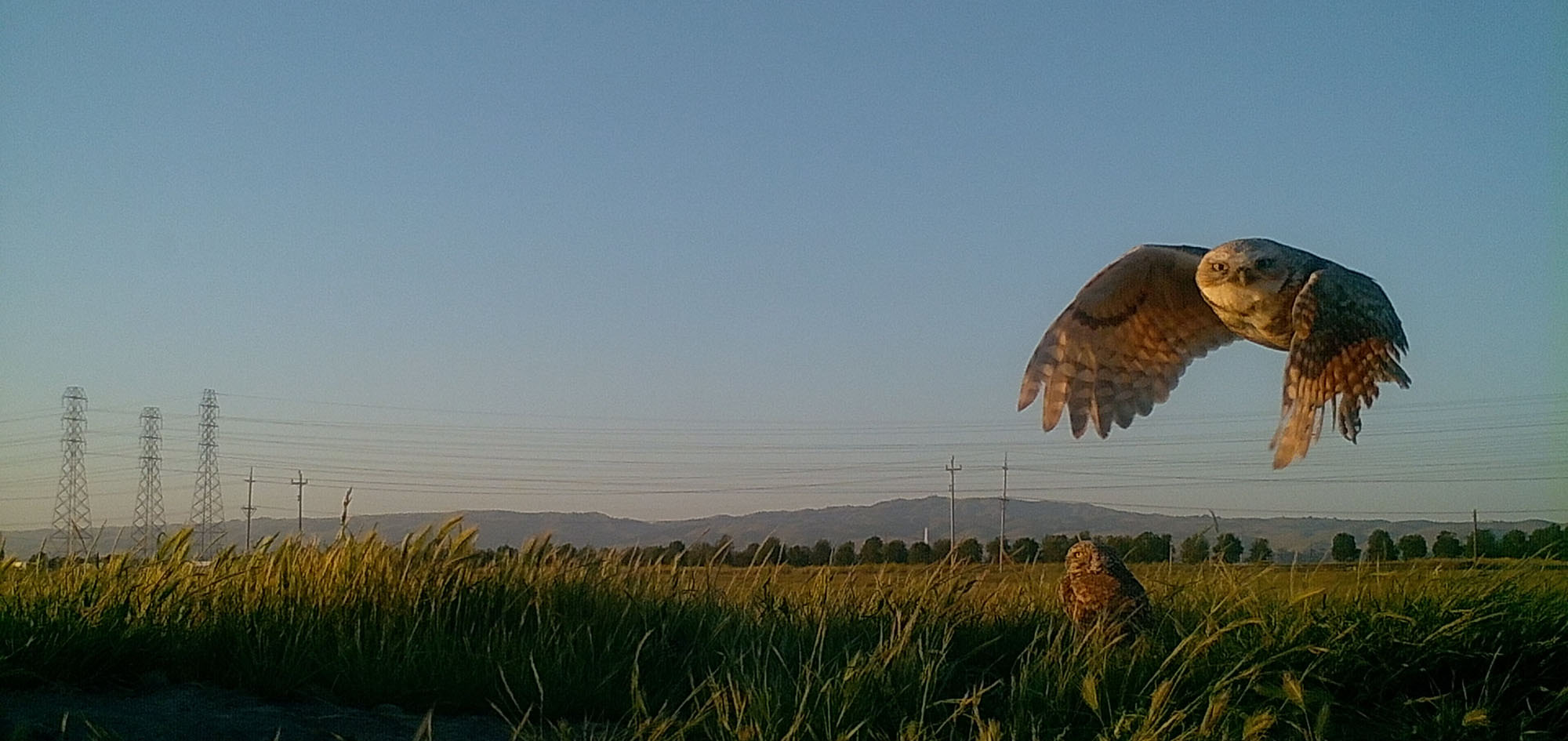
The Western Burrowing Owl used to be found living and nesting at many locations throughout the Bay Area. The charismatic bird is the only owl species that is active during the day and has always been a favorite among birders. Unfortunately, in recent years the species has been listed by the State of California as a Species of Special Concern. In California these owls are primarily threatened by habitat loss due to urban development, eradication of ground squirrels (which provide the burrows the owls use to nest), and intensive agricultural practices.
In 2012, SFBBO began a study to test strategies to enhance Burrowing Owl habitat in the Warm Springs Unit of the Don Edwards San Francisco Bay National Wildlife Refuge in Fremont. In 2014, we began assisting the Refuge in conducting annual surveys to monitor the quality of this habitat, performed vegetation management for weed abatement, and recruited and coordinated community science volunteers to perform spring and summer Burrowing Owl breeding and wintering surveys to estimate owl population size and assess nest success and worked actively to to improve foraging habitat for this species.
This led to a new five-year project for the Santa Clara Valley Habitat Agency in 2015 to partner with other organizations to monitor and enhance habitat for two of the last Burrowing Owl populations in the Bay Area at the National Wildlife Refuge property in Warm Springs, Fremont, and at the San Jose-Santa Clara Regional Wastewater Facility near Alviso. In addition to surveys and habitat work, we also used nest cameras to capture predator behavior.
In 2019, we concluded this five-year project and then joined forces with the Midpeninsula Regional Open Space District and Pathways for Wildlife to conduct Burrowing Owl surveys in the Santa Cruz mountains to investigate if owls used badger burrows there.
Through our Strategic Plan we aim to expand the use of our data and research, and engage with other scientific communities and resource-management agencies, to address climate change, habitat loss, and other environmental issues. We hope you will join our community of scientists, resource managers, and environmental organizations by using our data and analysis to better understand how birds are doing and find ways to promote sustainability in your community.
Jump to the following sections: Impact of Our Work, View Our Data, and Thanks to Our Supporters.
Impact of Our Work
Share Data Regionally – Our data was included in the Don Edwards San Francisco Bay National Wildlife refuge’s biological reports and we also shared it with other researchers and organizations who conduct relevant work. This work helped in habitat protection for Burrowing Owls in San Jose.
Enhanced Bay Area Habitat – We constructed and maintained artificial burrow systems, enhanced potential foraging areas with native plants and structural features, and at the Alviso site we experimented with using high-salinity water to suppress weeds on the mounds used by owls. Overall, we helped enhance over 700 acres of Burrowing Owl habitat.
View Our Protocols, Data, and Findings
Click on the links below to view our data and reports. For information about our Burrowing Owl research and habitat restoration work or to discuss collaborations involving our data, please contact Science Director Katie LaBarbera at klabarbera@sfbbo.org.
Reports, Presentations, and Analysis
- Santa Clara Valley Habitat Plan 2020 Burrowing Owl Breeding Season Survey Report
- Winter Burrowing Owl Monitoring, 2016-2018, Final Report
- Burrowing Owl Counts, Surveys, and Nesting Habitat Maintenance at Warm Springs Unit, 2015-2017 Overview
- Santa Clara Valley Habitat Plan
- Santa Clara Valley Habitat Plan – Burrowing Owls
- Conservation of a Declining Species in and Urban Landscape
Partner Websites
- Burrowing Owl Protection – Santa Clara Valley Audubon Society
- Burrowing Owl Management and Conservation – Talon Ecological Research Group
- Badger and Burrowing Owl Habitat Study – Midpeninsula Reginal Open Space District
Articles and Education
- Check out our 2020 Ask a Scientist social media campaign on Burrowing Owls
- Against the Odds – The Western Burrowing Owl, Nature Outside, February 2019
- A Quest for Cow Resistant Cameras to Study Burrowing Owls, Wingbeat, August 2018
- Improving Burrowing Owl Habitat in South San Francisco Bay, Tideline, Winter 2017
Thanks to Our Supporters, Partners, and Volunteers
Thank you to our team of volunteers who helped us conduct surveys and enhance Burrowing Owl habitat and our partners at the Don Edwards San Francisco Bay National Wildlife Refuge, Talon Ecological Research Group, Pathways for Wildlife, and Santa Clara Valley Audubon Society. Thanks also to our SFBBO donors and the Santa Clara Valley Habitat Agency and Midpeninsula Regional open Space District for funding this work.