
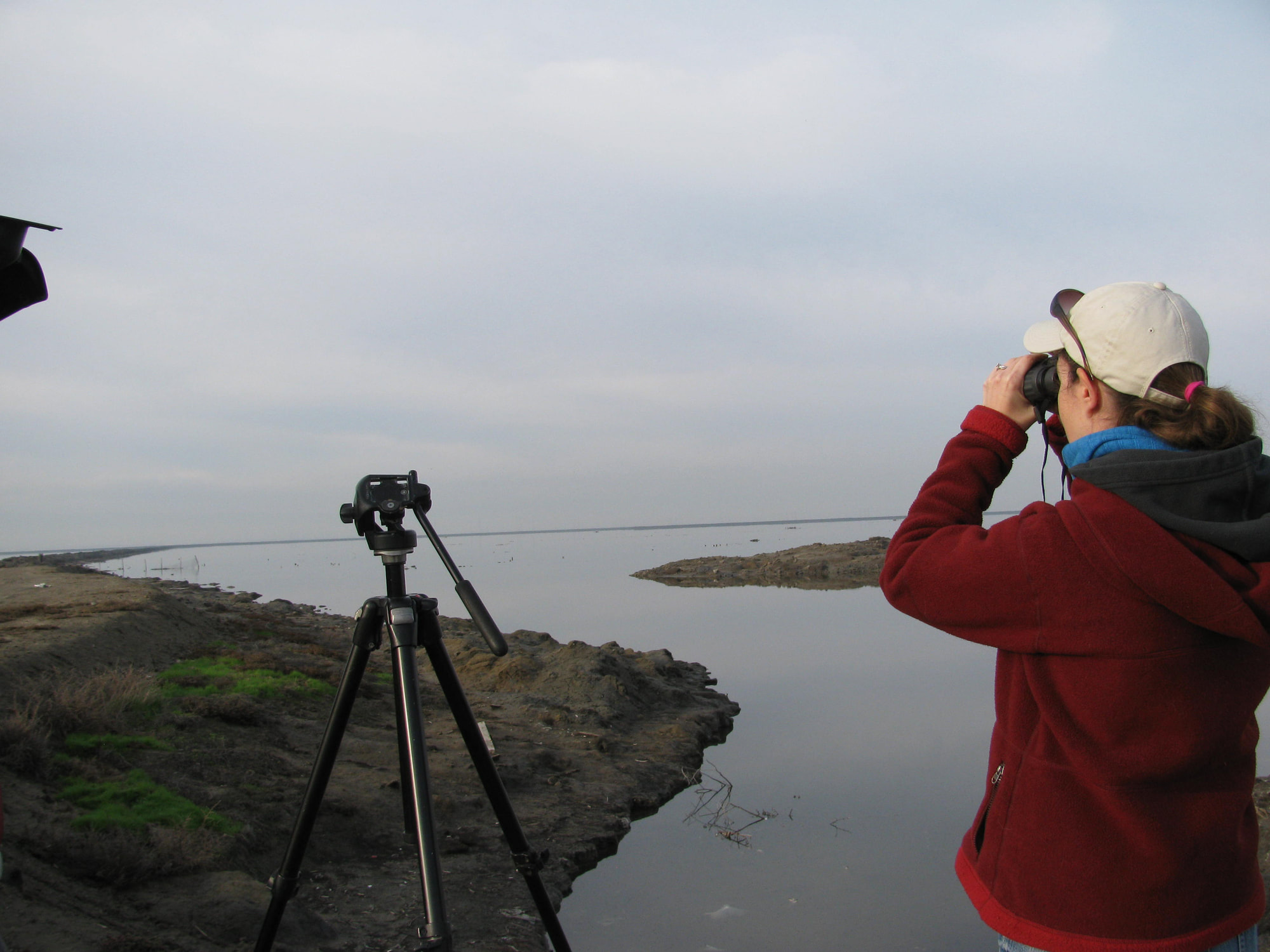

Shorebirds are a fascinating group which have enlightened me to the importance of wetland and estuary habitats and have informed my understanding of ecological concepts like niche partitioning. Despite my appreciation of these birds, the fact remained that my ability to tell a Lesser from a Greater Yellowlegs was far less than great. If I were to come across a Whimbrel or a Long-billed Curlew, there wasn’t much I could do but begrudgingly write “Numenius sp.” into my notebook. Shorebird identification was not my forte…
Luckily for student naturalists like myself, there are talented educators like Alvaro Jaramillo who can help with this sort of ornithological shortcoming. My mentor and former instructor, Leticia Gallardo, who had guided me through West Valley College’s Ecology, Biodiversity, and Conservation program told me that Alvaro’s Shorebird ID Workshops would be an …
Everyone enjoys an enthusiastic teacher and Alvaro’s love for his subject is obvious. Far from a monotonous listing of differential features among the covered taxa, Alvaro’s beginning workshop was engaging and informative. He expertly layered insight to the biology of the birds he was talking about and expressed to us what makes them special. It is a pleasure to hear about the species in the local area from someone that knows them so well.


In the advanced shorebird ID workshop, Alvaro gave us a lesson on sonograms and bird song before taking a deeper dive into the different species an attentive shorebirder might encounter. We learned that getting to know the more common species could allow us to pick out the oddities. There’s no birding sixth sense required to recognize a Stilt Sandpiper mingling with a group of Dowitchers. Patience and practice are the key.
I take great joy in getting to know different groups of organisms more deeply. As I enter UC Santa Cruz’s Ecology and Evolutionary Biology program, I’m excited to apply the knowledge I have gained through this experience and to help others learn about these beautiful creatures as well. We have taken so much from shorebirds in terms of their habitat. If people can only get to know them, then maybe they will feel more compelled to protect them.
I would highly recommend participating in a workshop with Alvaro Jaramillo if you get the chance. You will surely walk away with new knowledge, appreciation, and inspiration in regard to the birds we share our world with.
Brandon is a junior in UC Santa Cruz’s Ecology and Evolutionary Biology program and a new field technician for the Stanford Conservation Program. He is an avid naturalist and aspiring biologist in the making. Both avian reptiles and traditional reptiles are a passion of his and he is grateful to gain a knowledge of shorebirds through an SFBBO scholarship