
By SFBBO Lead Biologist Gabbie Burns

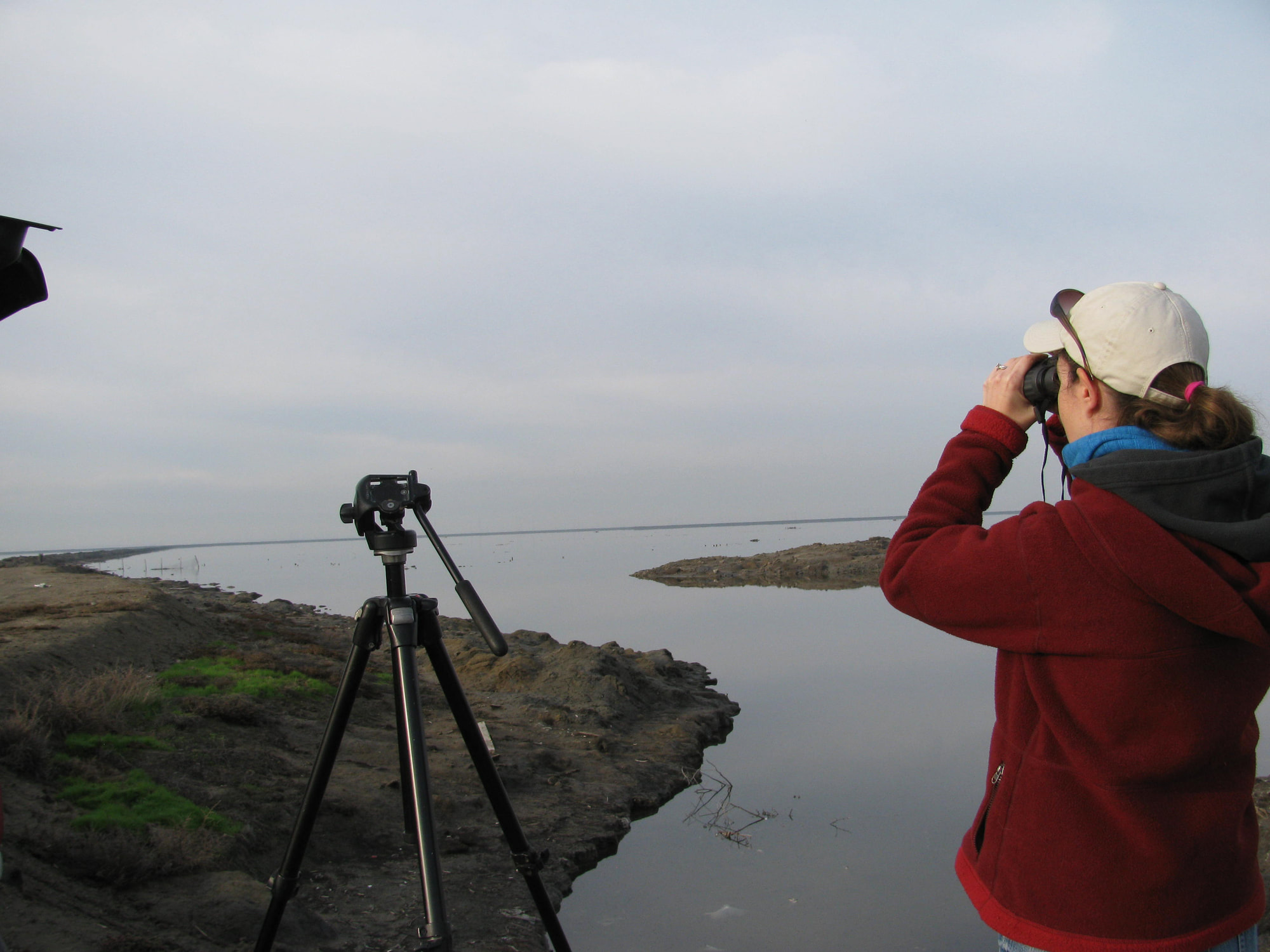
In 2020, SFBBO conducted our first year of a new comprehensive phalarope survey program. Phalaropes are medium-sized shorebirds that pass through San Francisco Bay during spring and fall migration. Unlike other shorebirds that find food in the ground at the water’s edge, phalaropes eat small items at the surface of open water and often swim. Due to their use of open water, it is difficult to find and count phalaropes to understand population trends. This means …
that there’s a lack of information about their populations, which is concerning because phalaropes are considered to be highly vulnerable to climate change.
In 2020, SFBBO conducted our first year of a new comprehensive phalarope survey program. Our volunteers looked for phalaropes in 7,065 acres of suitable habitat every two weeks throughout the 2020 fall migration (July-September). Due to the pandemic, we were not able to visit all of the sites that we had originally planned, but SFBBO counted 6,671 phalaropes in the south San Francisco Bay (2,034 Wilson’s phalaropes, 4,520 Red-necked phalaropes, and 177 phalaropes that couldn’t be identified to species). The data from our phalarope program will help us answer questions about how the birds are using different habitats while they migrate through the Bay Area.
In 2020, SFBBO conducted our first year of a new comprehensive phalarope survey program. Our volunteers looked for phalaropes in 7,065 acres of suitable habitat every two weeks throughout the 2020 fall migration (July-September). Due to the pandemic, we were not able to visit all of the sites that we had originally planned, but SFBBO counted 6,671 phalaropes in the south San Francisco Bay (2,034 Wilson’s phalaropes, 4,520 Red-necked phalaropes, and 177 phalaropes that couldn’t be identified to species). The data from our phalarope program will help us answer questions about how the birds are using different habitats while they migrate through the Bay Area.

In addition, SFBBO’s phalarope surveys are part of a larger coordinated effort to count birds throughout Western North America. As part of the International Phalaropes Working Group, we worked with partner organizations at Mono Lake, Great Salt Lake, and other stopover sites to coordinate count dates, which allowed for more accurate estimates of phalarope populations across the Pacific Flyway. We published the results of these coordinated phalarope counts in a comprehensive report, which was released this week.
SFBBO’s continuing participation in this working group will allow us and 15 governmental and non-governmental groups from 18 organizations in the Americas to address the most urgent research and conservation needs for two species of phalaropes: Wilson’s Phalarope (Phalaropus tricolor) and Red-necked Phalarope (Phalaropus lobatus). Migratory birds like phalaropes can be particularly difficult to monitor and conserve because of the distances that they travel, which makes these collaborative projects so important. SFBBO aims to continue these efforts with surveys in summer and fall 2021, at which point we anticipate recording even more phalaropes with the relaxation of site access restrictions due to COVID-19.
If you’re excited about phalaropes, here are some things you can do next:
SFBBO’s continuing participation in this working group will allow us and 15 governmental and non-governmental groups from 18 organizations in the Americas to address the most urgent research and conservation needs for two species of phalaropes: Wilson’s Phalarope (Phalaropus tricolor) and Red-necked Phalarope (Phalaropus lobatus). Migratory birds like phalaropes can be particularly difficult to monitor and conserve because of the distances that they travel, which makes these collaborative projects so important. SFBBO aims to continue these efforts with surveys in summer and fall 2021, at which point we anticipate recording even more phalaropes with the relaxation of site access restrictions due to COVID-19.
If you’re excited about phalaropes, here are some things you can do next:
- Learn more about phalaropes and SFBBO’s monitoring program by watching Science Director Max Tarjan’s Birdy Hour talk
- Read the joint report on this research: Coordinated phalarope surveys at western North American staging sites, 2019-2020
- Sign up to volunteer with SFBBO for 2021 phalarope counts
- Report your phalarope sightings on eBird and iNaturalist, we use citizen/community science data to inform our surveys!


