
Free High School Bird Migration Curriculum for Teachers
Birds explored in this module include Bay Area species that students may encounter during their field trip or at a local open space. They include:
- Barn Swallow
- Dunlin
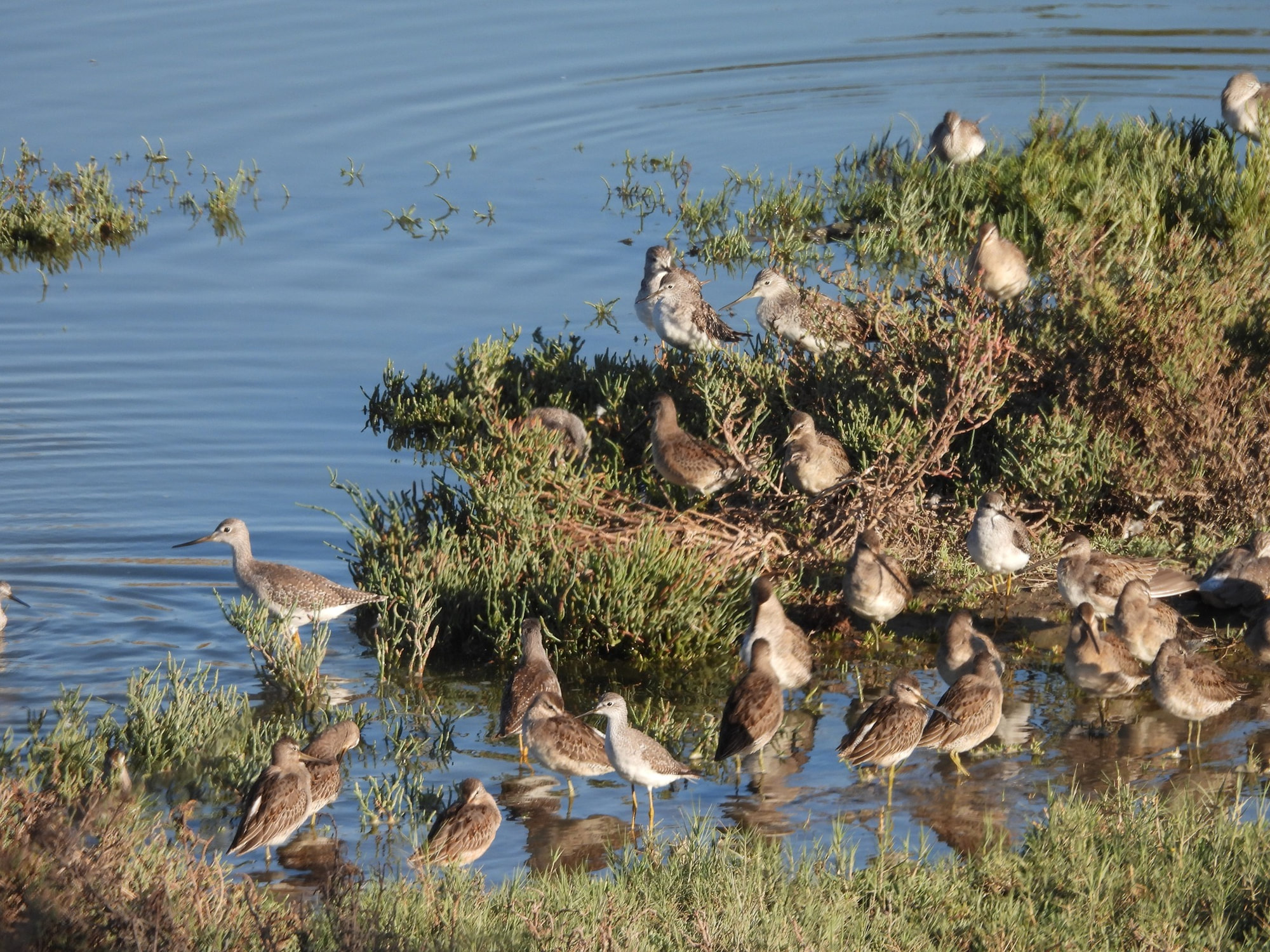
- Long-billed Dowitcher
- Swainson’s Thrush
- Western Sandpiper
- Western Tanager

- Lesson overview and edits for time – Infographic overview of the three lessons and suggestions for what to cut or assign as homework if short on time.
- Bird Migration Unit Glossary – Glossary of terms used in the lesson materials.
- Videos:
- Motus Wildlife Tracking System Introductory Video (2.5 minutes) – This video from Motus provides an introduction to the importance of birds, the plight of bird populations, and how Motus can help.
- SFBBO Introduction to Motus and Tracking Birds Video (3 minutes) – This animated video created by SFBBO provides an introduction to bird tracking technologies with a focus on the advantages of Motus. Closed captions in Spanish are available.
- Community science app guides for field trips:
- Mark & Recapture Activity – An extra activity worksheet modeling how mark & recapture works to estimate bird populations.
Field Trip
This module is aligned with field trips options for students when funding is available to support them:
- Cooley Landing in East Palo Alto – a location considered for a Motus tower; students engage in community science, practice observing wild birds, and explore questions related to habitat and threats to birds
- SFBBO’s Coyote Creek Field Station (CCFS) in Milpitas – our bird banding station where we have a Motus tower set up; students can see wild birds in the hand and explore why and how scientists study birds

As you review and use the lessons, we would appreciate your feedback. Please fill out this feedback survey so we can continue to improve the activities, make them more usable for you and other teachers, and understand how the lessons are being used.
This module was developed in partnership with Environmental Volunteers by Leslie Anido, Wendy Gibbons, Tonia Spyridi, Lisa Wagner, Sirena Lao, and Christine Zack thanks to a Midpeninsula Regional Open Space District Access, Interpretation, and Education Grant. A special thanks to high school volunteers Nishika Ivaturi and Jose Tadeo for their contributions on this project.
This grant supported SFBBO and EV’s mission of Expanding Access to Environmental Education and Science Engagement in our neighboring community. Our goal is to inspire positive environmental action and future fields of study in science among historically underrepresented populations through experiential science education.
