
California Gull Research
Quick Links:
How to Become a Volunteer • 2023-2026 Strategic Plan
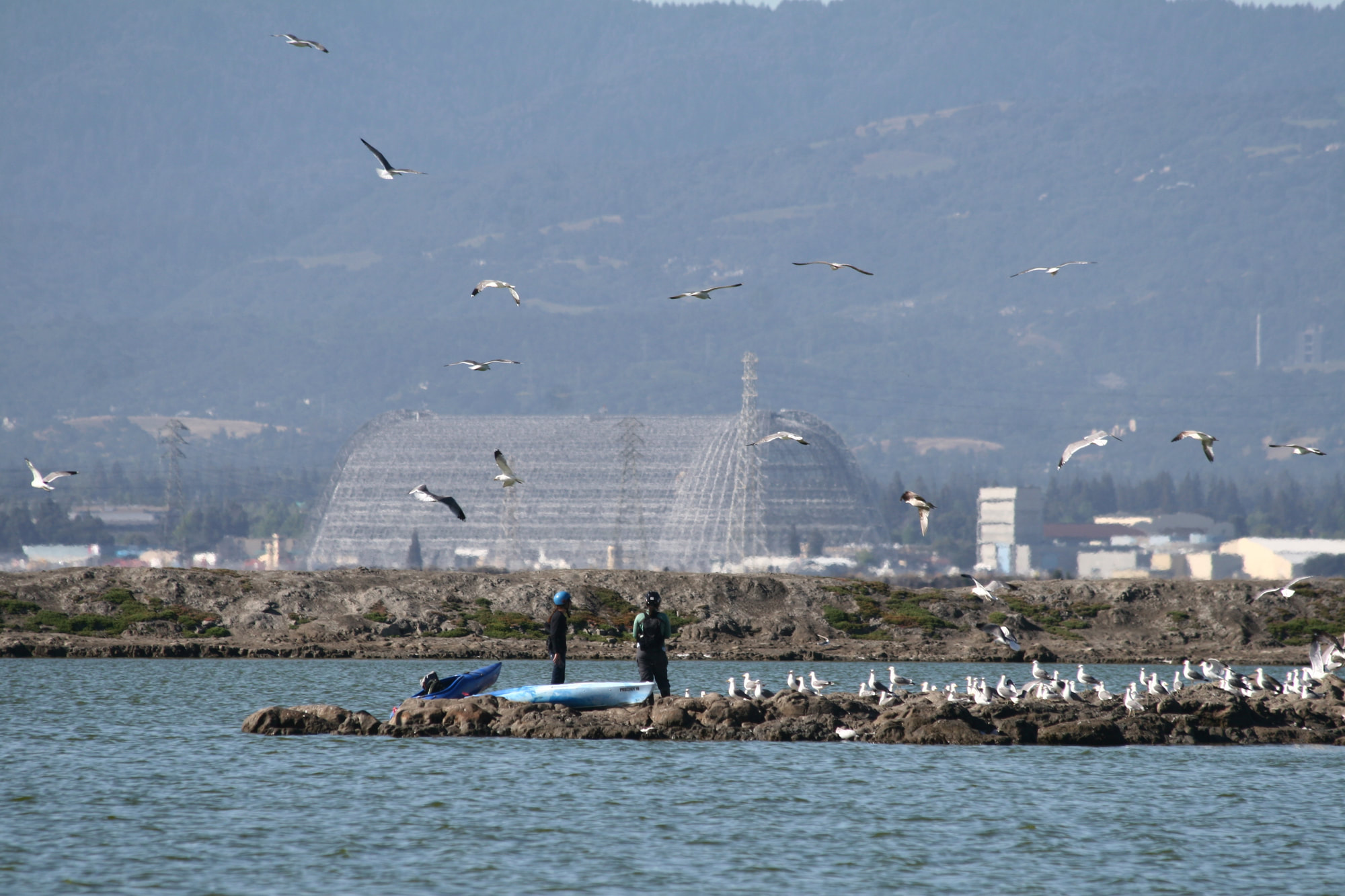
California Gulls are the most common gull species in the South San Francisco Bay, especially during the breeding season. Since the early 1980s, our biologists and community scientists have monitored California Gull populations in the South Bay, and documented a dramatic increase from less than 50 breeding birds to over 45,000 breeding gulls in 2021. California Gulls may have negative effects on other ground-nesting birds and have been found to be significant predators of American Avocet, Black-necked Stilt, and Western Snowy Plover eggs and chicks.
However, recently, gull numbers have stabilized in the Bay Area. The former South San Francisco Bay salt pond where 23,000 California Gulls nested until 2010 (Pond A6) was restored to tidal action in December 2010. Many of the gulls, presumably displaced by the restoration, moved to new nesting colonies in Alviso. This survey helps us determine if and where displaced California Gulls establish new colonies. We’ve also banded over 10,400 California Gulls since 1983 (over 1,000 of these at Pond A6 before the levee was breached) in order to track their movements.
Through our Strategic Plan we aim to expand the use of our data and research, and engage with other scientific communities and resource-management agencies, to address climate change, habitat loss, and other environmental issues. We hope you will join our community of scientists, resource managers, and environmental organizations by using our data and analysis to better understand how birds are doing and find ways to promote sustainability in your community.
Jump to the following sections: Impact of Our Work, View our Data, California Gulls in the Media, Get Involved, and Thanks to Our Supporters.
The Impact of Our Work
We share our long term data set with the U.S. Fish and Wildlife Service, Bay Area land managers, other scientists and the public to help people make resource management decisions that protect birds. We also share it with universities and other groups that are doing region-wide research projects to help them understand localized bird population trends.
View Our Protocols, Data and Findings
Click on the links below to view our data and reports. For information about our California Gull research or to discuss collaborations involving our data, please contact Science Director Nathan Van Schmidt at nvanschmidt@sfbbo.org.
- *NEW* Interactive map to explore California Gull survey data – 2013-2023. Start by clicking on a gull icon in the map to view data for that colony location. You can choose which data to display in the Graph Type drop down. At the bottom of the page, you will also find a static graph of the total number of California Gull nests recorded since 2013.

- Colonial Waterbird Nesting Summary Annual Reports for the U.S. Fish and Wildlife Services – 2005-2020
- Ask a Scientist Social Media Campaign – 2020
- SFBBO’s California Gull Research – 2019
- Waterbird Program 2017 Annual Report by Science Director Max Tarjan – 2017
- California Gull Population Growth and Ecological Impacts in the San Francisco Bay Estuary – 1980-2016
- California Gull Population Growth and Response to Tidal Marsh Restoration in South San Francisco Bay – 2014
- The State of the Birds San Francisco Bay – 2011
- California Gull Re-Sightings – 2011
California Gulls in the Media
- Species to Look For in 2022, Bay Nature, June 28, 2022
- Mystery of Seagulls Feasting on Oracle Park Leftovers Revealed, NBC Sports, June 11, 2021
- Fowl Ball: The Secret Life of Seagulls at Oracle Park, NBC Bay Area, June 10, 2021
- Opinion: Are Sea Gulls Friend or Foe in La Jolla?, La Jolla Light, September 4, 2019
- Not Your Average Seagull, NorCal Public Media Bay Area Bountiful, August 26, 2019
- A Chain Reaction Brought Gulls to the Bay … Now They Are Eating Other Birds, KALW Crosscurrents, August 15, 2019
- Bay Area Battles Seagull Invasion, CBS Evening News, June 18, 2014
- With Flares and Falcons, Bay Area Battles Seagull Invasion, CBS News, June 18, 2014
- Morris: Oldest California Gull Known Found in Silicon Valley, San Jose Mercury News, August 22, 2013
- California Gull Making Great Strides in Rehabilitation is Found to be the Oldest in North America, Wildlife Center of Silicon Valley, August 21, 2013
- California Sea Gull Population Explodes, Bringing Flocks of Problems, San Jose Mercury News, July 17, 2013
- In San Francisco, Look out for Gulls Gone Wild, NPR, August 9, 2011
- When Game Ends, Gulls Flock to Stands, New York Times, July 23, 2011
- Gulls Threaten South Bay Salt Pond Restoration Work, KQED Science, July 15, 2011
- Birders Urged to Help Track California Gull, USGS Sound Waves, April/May 2011
- Besieged by Birds, Leader-Telegram, March 4, 2011
- Gulls Winning Wetlands Battle, East Bay Times, November 5, 2009
Get Involved
Volunteer – Receive training about our field protocols and help our biologists monitor nests by foot or kayak around the Bay Area in May each year by becoming a volunteer.
Donate – Make a positive impact for birds and habitats by giving generously to SFBBO. Every donation we receive is wisely invested in our mission.
Report – If you spot a California Gull with a band on its leg, please report it to Science Director Gabbie Burns at gburns@sfbbo.org.
Learn – To bring an activity to your class or group, please contact outreach@sfbbo.org.
Share – Share our story by covering our work in your publication. Please contact Outreach and Communications Director Kristin Butler at kbutler@sfbbo.org to learn more.
Thanks to Our Supporters and Volunteers
We could not do this work without the dedication of our community science volunteers and the support of our donors who contribute to our annual appeals and membership program to fund staff time to manage the program, analyze our data, and share it with our partners and the public. Check out former Science Director Max Tarjan’s thank you message to donors.