Notes from the Station

Meet the birds we study in our landbird banding program at Coyote Creek Field Station

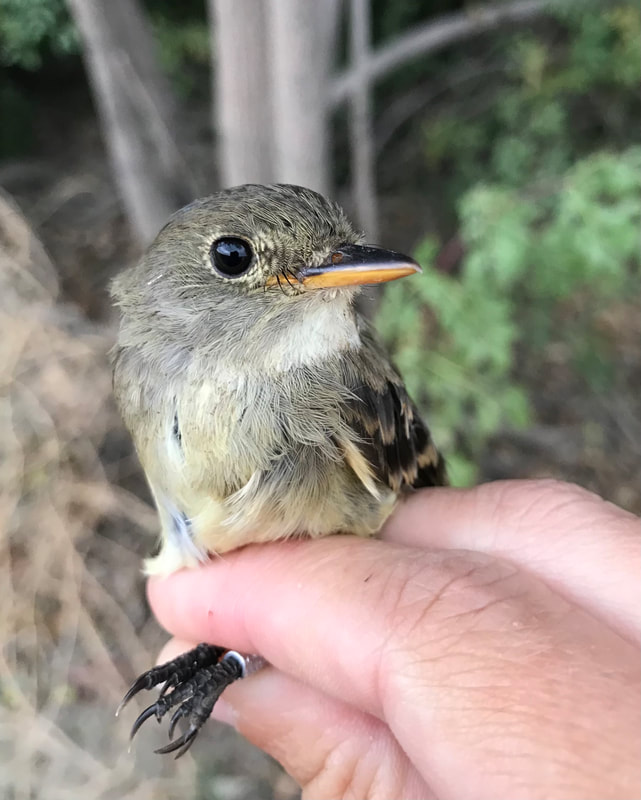
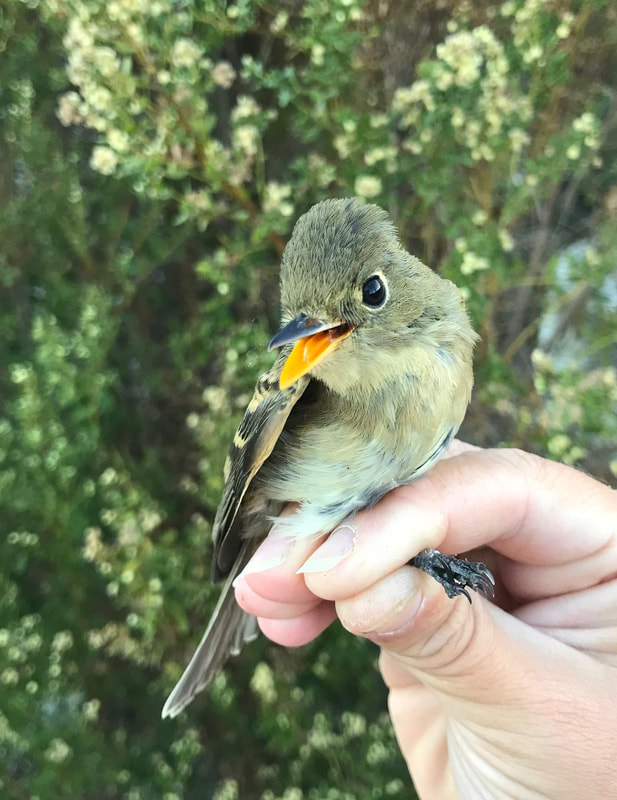
  • Western Flycatcher

    Picture

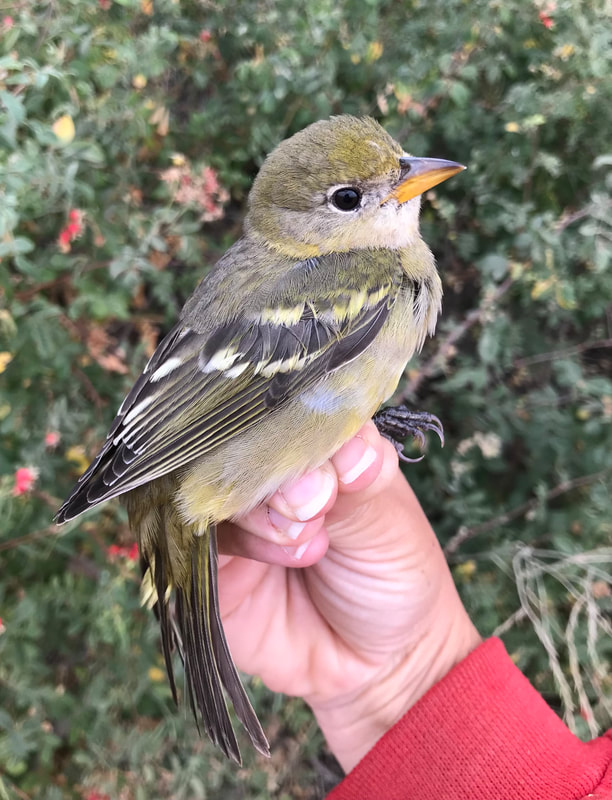
    Species: Western Flycatcher
    Most recent capture date: 9/27/2023
    Age: less than six months old

    Notes: A few months ago, this bird would have been a Pacific-slope Flycatcher. Ornithologists are gathering data and revising our understanding of bird relationships all the time, and just this year, based on genetic data from a previously-unstudied region, the experts decided to “lump” Pacific-slope and Cordilleran Flycatchers into one species, the Western Flycatcher. This made a lot of sense considering that the two former-species were already nearly indistinguishable – but then, some similar-looking birds are genetically very distinct, so it’s always best to look at both morphology (appearance) and genetics together.

    On a different note – look at this bird’s very orange mouth!
    Read More


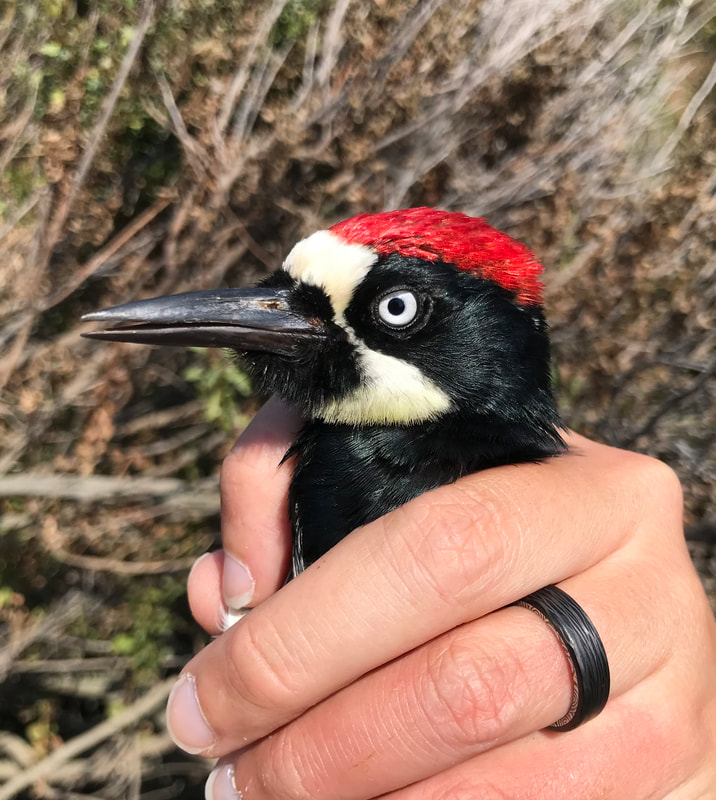
  • Acorn Woodpecker

    Picture

    Species: Acorn Woodpecker
    Most recent capture date: 9/23/2023
    Age: more than one year old
    ​Sex: male

    Notes: This fellow was quite a surprise. On the one hand, we did catch him right next to our largest oak tree, which is sensible Acorn Woodpecker habitat; on the other hand, the last time we caught an Acorn Woodpecker at CCFS was in 1989.

    Read More


  • Western Tanager

    Picture

    Species: Western Tanager
    Most recent capture date: 9/24/2023
    Age: less than six months old

    Notes: Looking at this bird, you might not suspect the glorious adult plumage to come. Are Western Tanagers the bird version of stunning celebrities who insist that they were unpopular nerds in high school?

    Read More


  • House Wren

    Picture

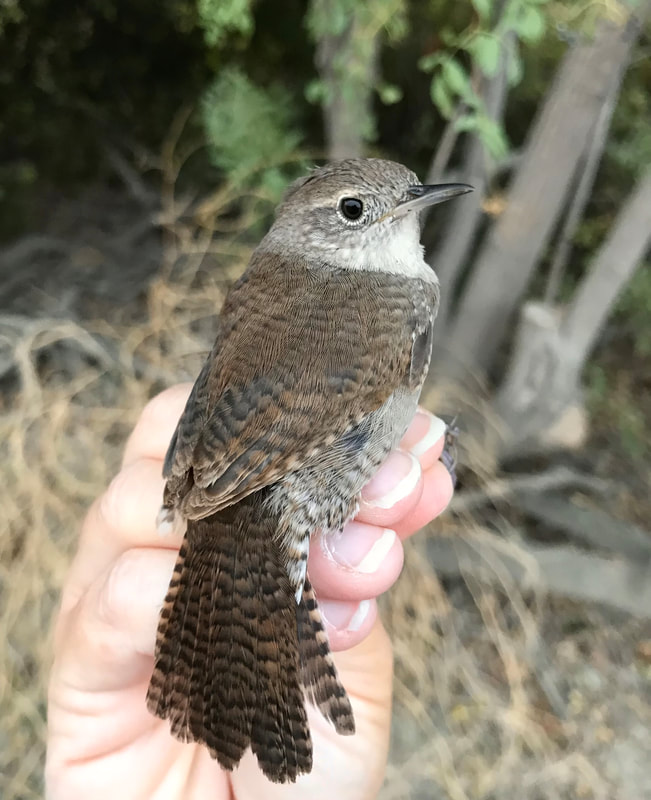
    Species: House Wren
    Most recent capture date: 9/10/2023
    Age: less than six months old

    Notes: Just try to convince me that this bird isn’t gorgeous. Look at those stripes! In a typical year at CCFS we catch hundreds of Bewick’s Wrens and just 10-15 House Wrens.

    Read More


  • European Starling

    Picture

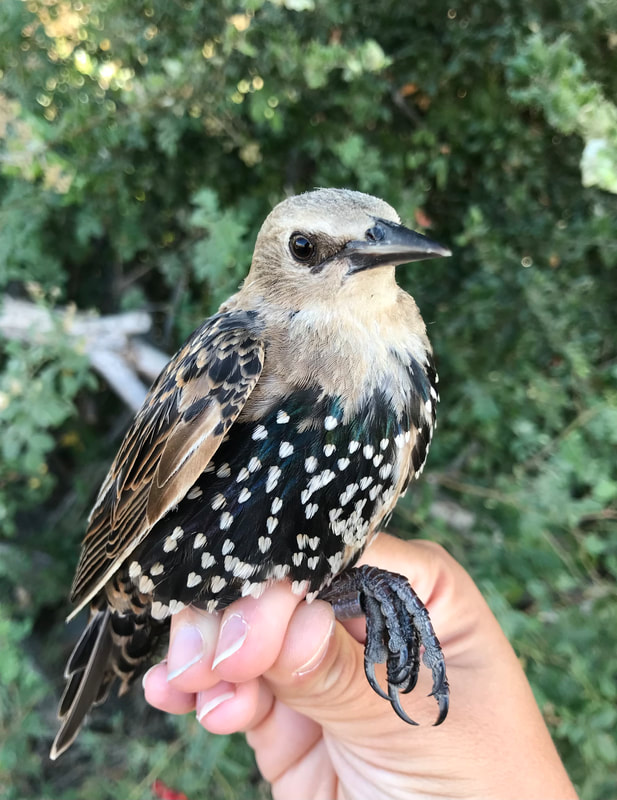
    Species: European Starling
    Most recent capture date: 9/03/2023
    Age: less than six months old
    ​Sex: female

    Notes: Yes, we band starlings! When we get the chance – they don’t often venture from the neighboring field into our riparian forest. Prior to this bird, we caught six in summer 2020, four in summer 2015, and so on at that low frequency. European Starlings are a nonnative species, introduced to North America by humans and now widespread; they aren’t targets of conservation like the other birds we band, but they can still tell us about bird behavior and ecology. On an individual level they’re striking and charismatic, with a funny frowny face unlike any other species we handle. This one is replacing her dull juvenile plumage with adult speckled iridescence.

    Read More


  • Northern Mockingbird

    Picture

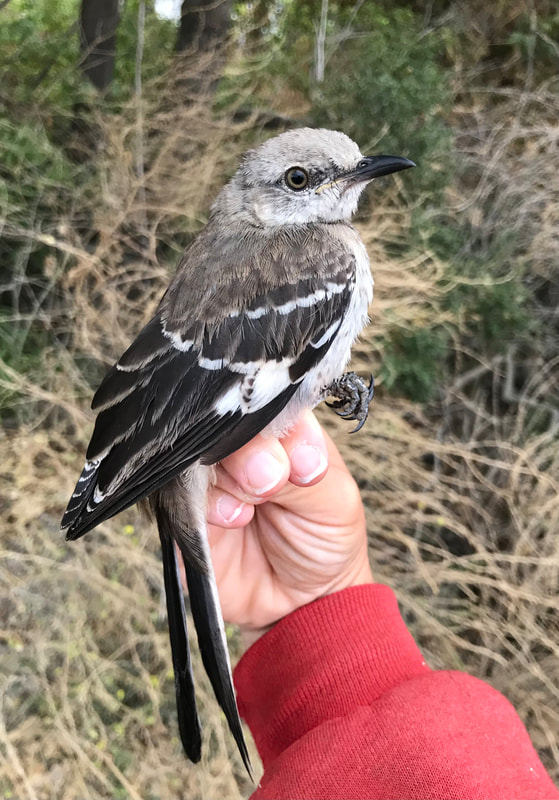
    Species: Northern Mockingbird
    Most recent capture date: 9/03/2023
    Age: less than six months old

    Notes: Northern Mockingbirds are famous for their mimicry of sounds, from other birds’ songs to shorebirds’ calls to frog croaks to car alarms. They can’t mimic sounds perfectly on the first try, however: they practice to perfect their repertoire. This young one probably has a lot of practicing to do still, but from my brief acquaintance with them, I can attest that they are at least very loud.

    Read More


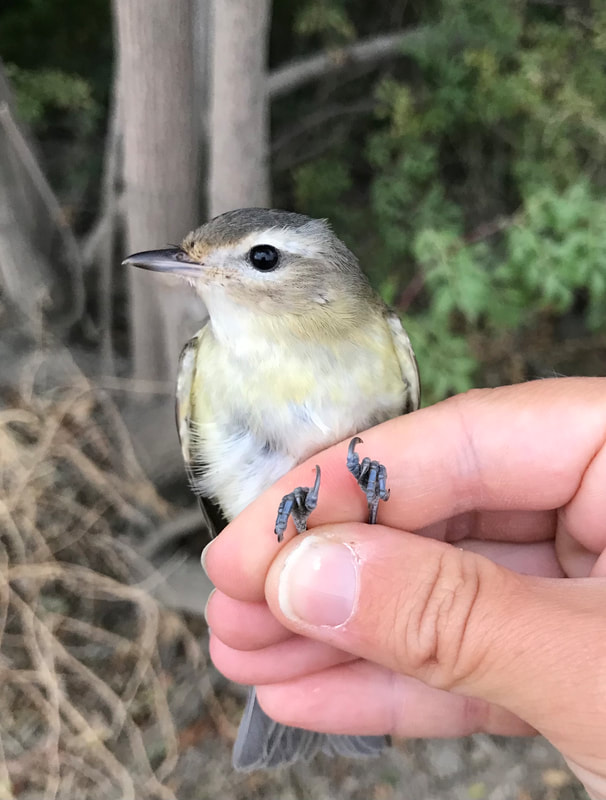
  • Warbling Vireo

    Picture

    Species: Warbling Vireo
    Most recent capture date: 9/03/2023
    Age: less than 6 months old

    Notes: Warbling Vireos are fairly regular visitors at our satellite banding sites near Stanford, but we get fewer than one per year at Coyote Creek Field Station. Isn’t this fellow elegant?

    Read More


  • Willow Flycatcher

    Picture

    Species: Willow Flycatcher
    Most recent capture date: 9/03/2023
    Age: less than six months old

    Notes: Every fall we get a flood of migrating Empidonax flycatchers, of which >95% are Western Flycatchers. A few, however, are Willow Flycatchers, distinguished by subtle traits such as lacking a prominent pale eyering. Willow Flycatchers are State Endangered, so we’re especially happy to see each one.

    Read More


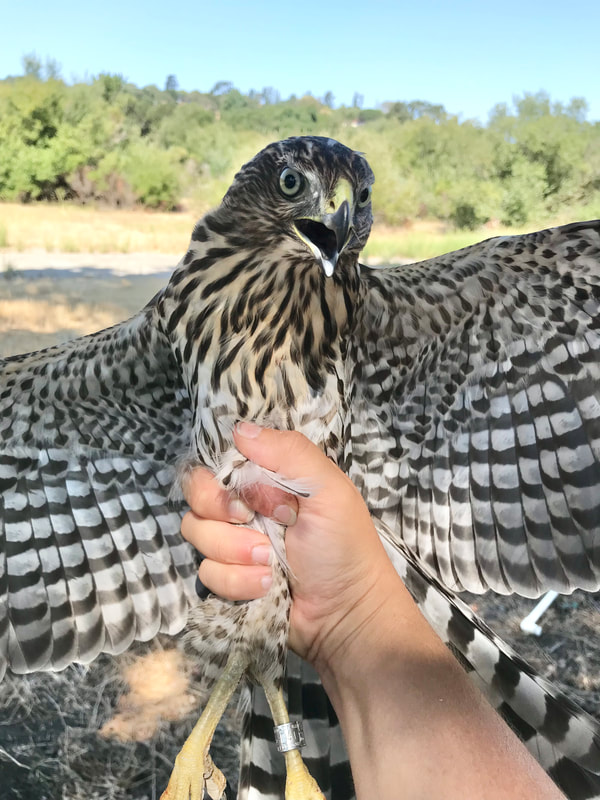
  • Cooper’s Hawk

    Picture

    Species: Cooper’s Hawk
    Most recent capture date: 8/23/2023
    Age: less than six months old
    ​Sex: male

    Notes: Cooper’s Hawks are bird hunters; you may see them at your bird feeder, looking to munch something other than seed. This kiddo was eyeing a flock of quail before he wound up in our net. Learning to hunt on their own is a big challenge for young raptors. I hope he managed to snag a meal after we released him.

    Read More


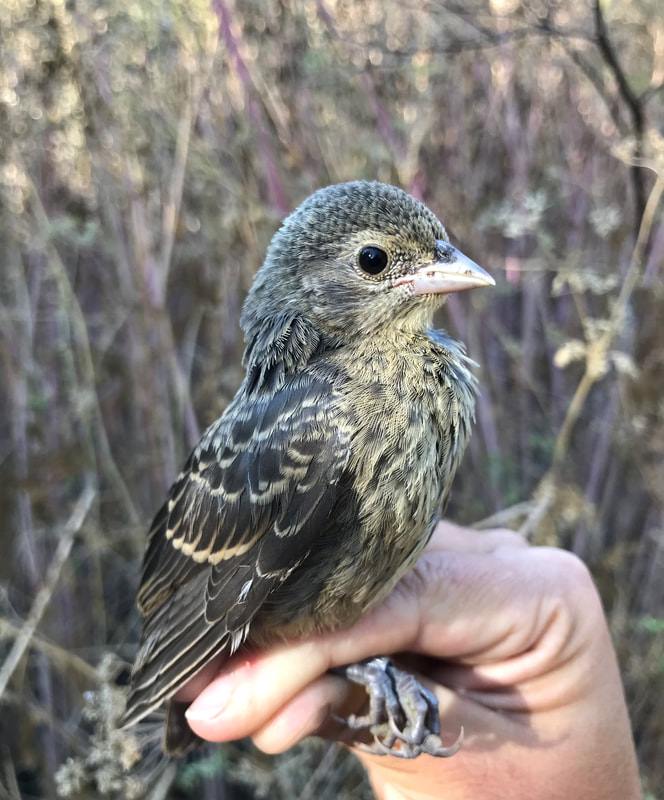
  • Brown-headed Cowbird

    Picture

    Species: Brown-headed Cowbird
    Most recent capture date: 8/6/2023
    Age: less than five months old

    Notes: Everyone’s favorite bird! Well, maybe not, but they’re an interesting species with odd adaptations. To find nests in which to lay their eggs and to know when to lay those eggs, female cowbirds search for nests within their territory and monitor the progress of those nests – the very same “nest searching” and “nest monitoring” that we ornithologists do in our research! At CCFS we have been catching the same female cowbird since 2019, so this may well be her baby; the last time we caught a hatch-year cowbird was back in 2016. This specific young cowbird was caught in the company of an adult Song Sparrow, which may be the bird who was raising it.

    Read More