Notes from the Station

Meet the birds we study in our landbird banding program at Coyote Creek Field Station

  • Black Phoebe

    Picture

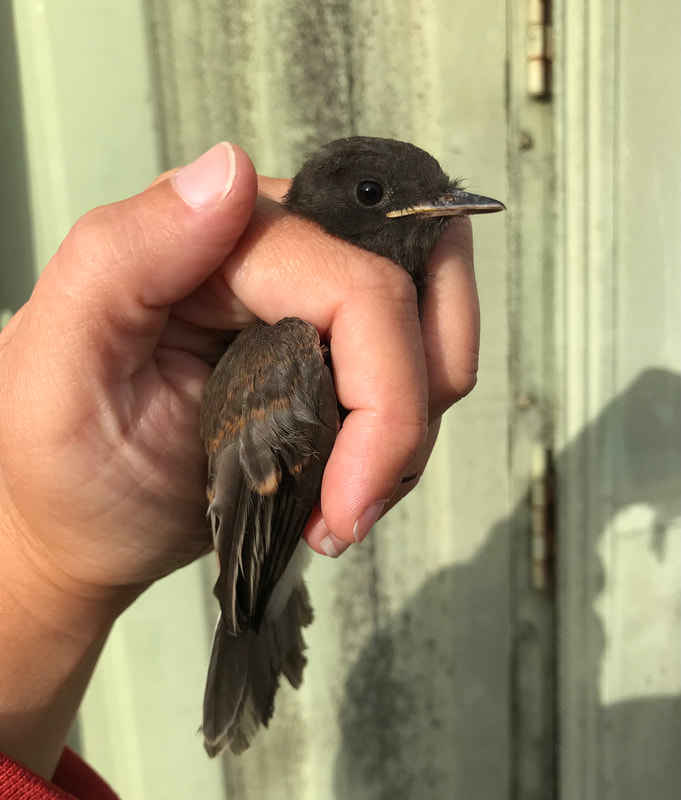
    Species: Black Phoebe
    Most recent capture date: 7/13/2022
    Age: less than 4 months old

    Notes: The Black Phoebes at CCFS seem to have had a great year: we’ve captured so many baby phoebes! You can tell this one is a baby because they have yellow gape at the corner of their bill, cinnamon wing bars on the wing, and an overall warm brownish cast to their plumage. An adult would be a cooler black color.
    Read More


  • Bullock’s Oriole

    Picture

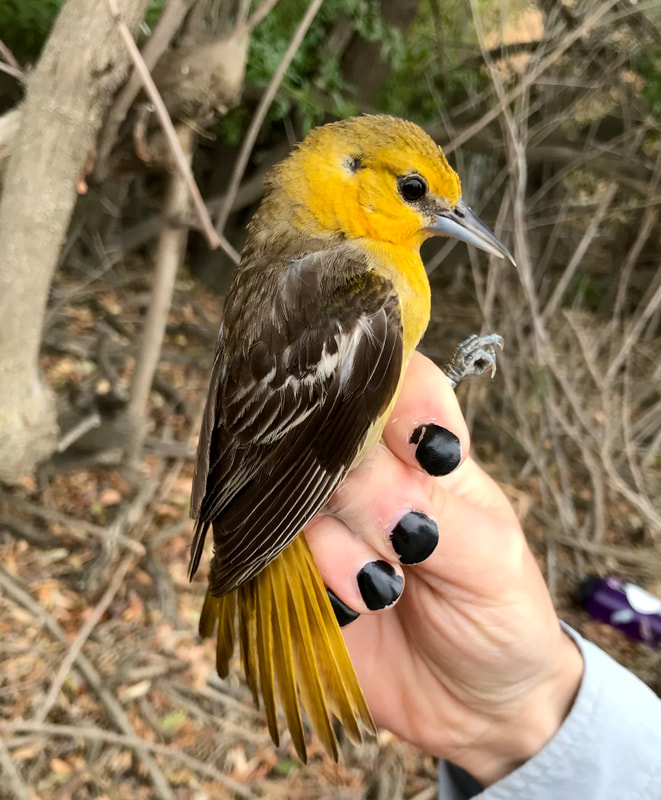
    Species: Bullock’s Oriole
    Most recent capture date: 7/3/2022
    Age: at least two years old
    Sex: female

    Notes: We haven’t caught nearly as many Bullock’s Orioles as usual this year. Hopefully they will be back in greater numbers next year.

    Read More


  • Downy Woodpecker

    Picture

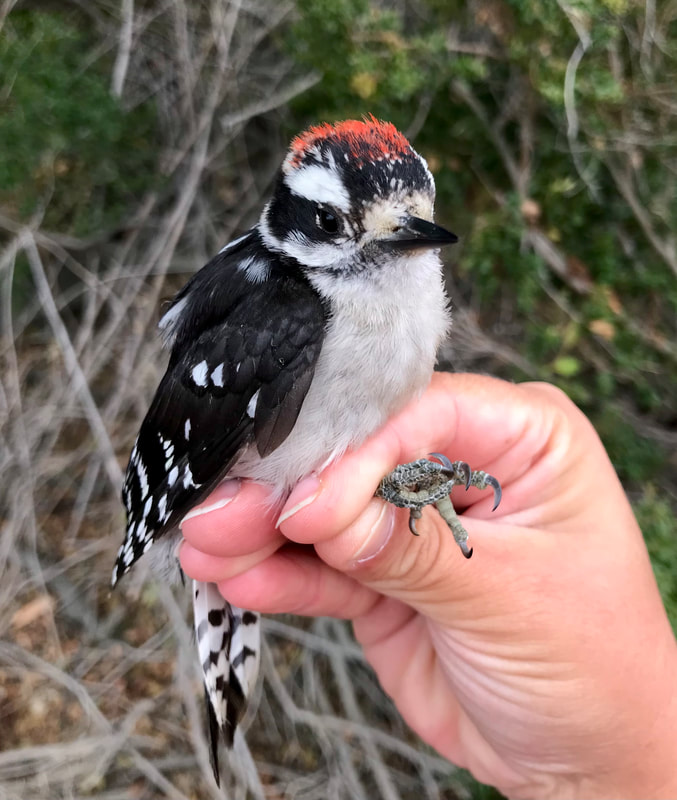
    Species: Downy Woodpecker
    Most recent capture date: 7/3/2022
    Age: less than four months old
    Sex: male

    Read More


  • Yellow Warbler

    Picture

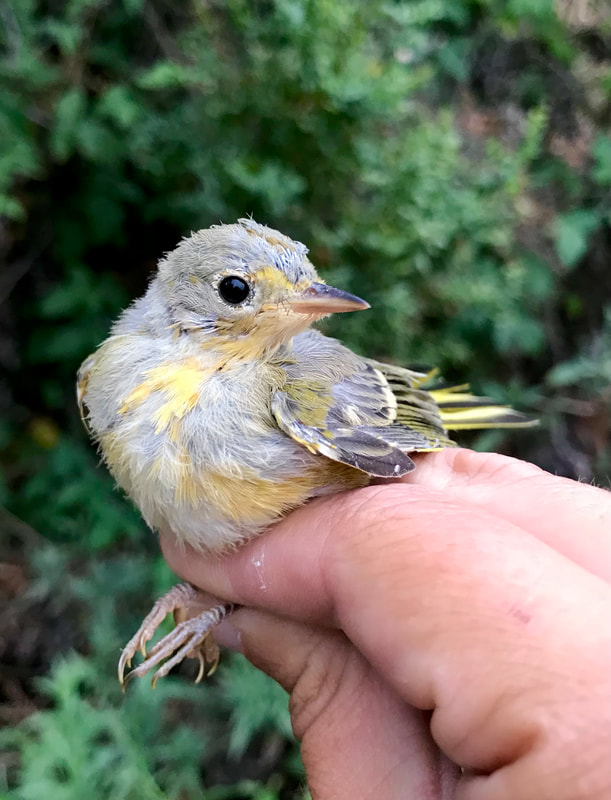
    Species: Yellow Warbler
    Most recent capture date: 7/3/2022
    Age: less than two months old

    Notes: Like the baby Wilson’s Warbler posted earlier this summer, this warbler is undergoing its preformative molt, replacing its drab nestling feathers with bright adult plumage. This individual was caught with an adult female: almost certainly its mother, still caring for it in its early days out of the nest. This bird is a promising sign that Yellow Warblers may be breeding near CCFS again. Providing breeding habitat for Yellow Warblers was one of the goals of the restoration of riparian vegetation at CCFS 30 years ago.

    Read More


  • Mourning Dove

    Picture

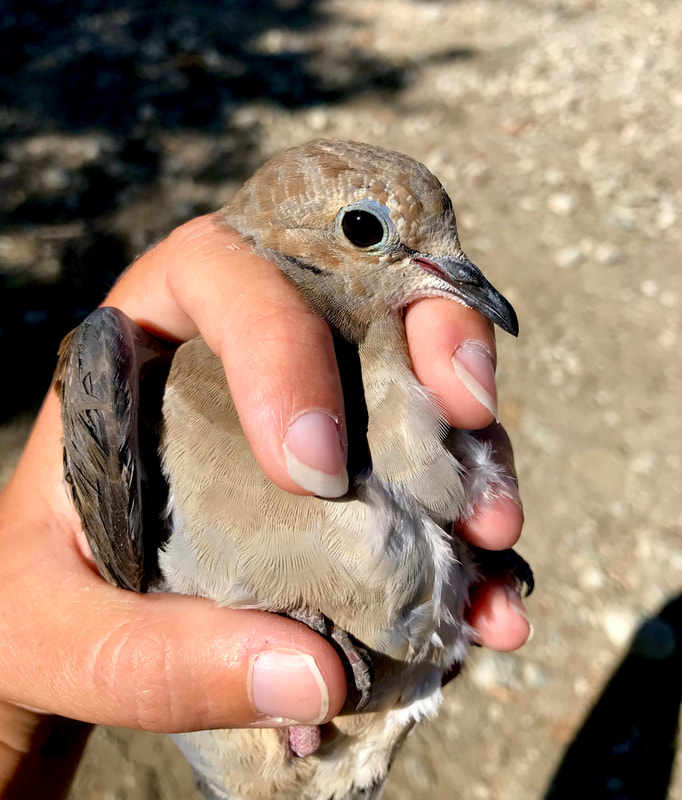
     Species: Mourning Dove
    Most recent capture date: 6/19/2022
    Age: less than four months old

    Notes: The mottled head on this bird is an indicator of its youth. In a few weeks it will be done with its awkward-baby phase and be a sleek, elegant adult.

    Read More


  • California Towhee

    Picture

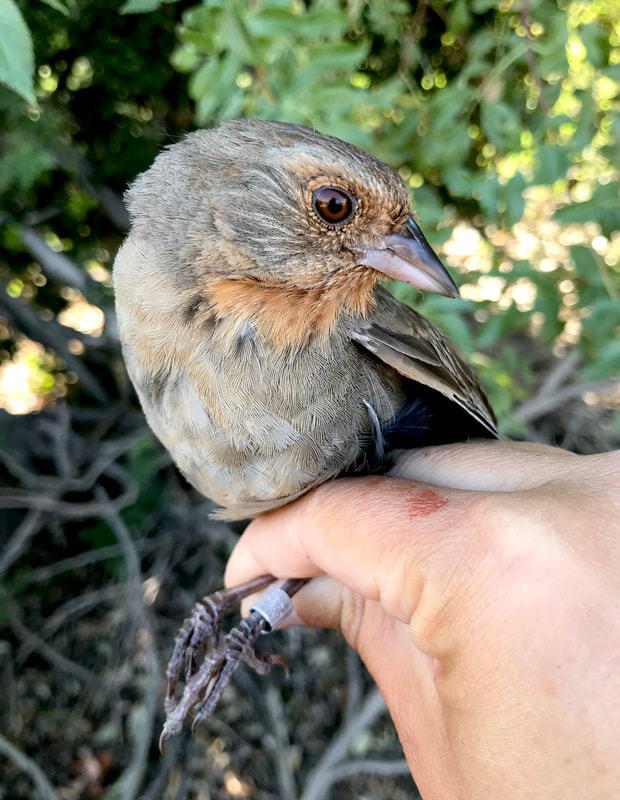
    Species: California Towhee
    Most recent capture date: 6/19/2022
    Earliest capture date: 4/16/2017
    Age: at least 6 years old
    Sex: female

    Notes: California Towhees have lovely subtle face patterns when you look close.

    Read More


  • House Finch

    Picture

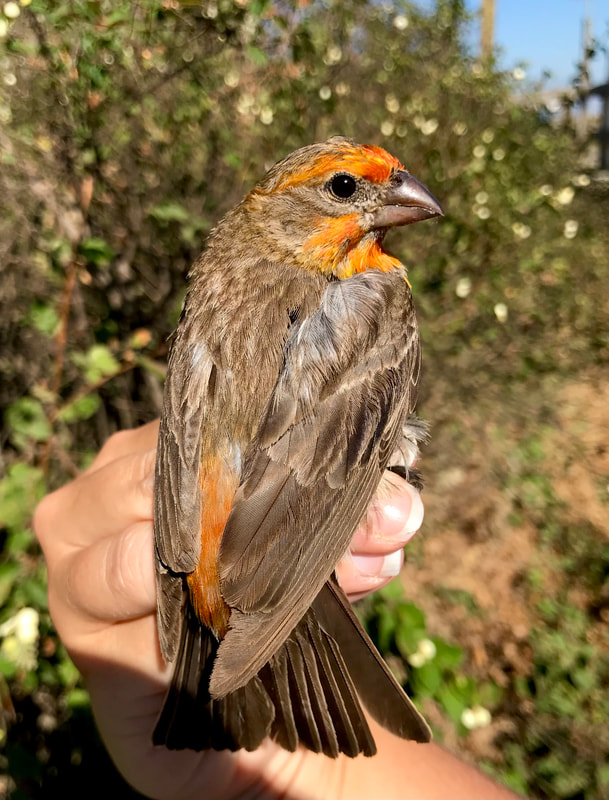
    Species: House Finch
    Most recent capture date: 6/15/2022
    Age: at least one year old
    Sex: male

    Notes: There has been some cool research on the differences between House Finch color morphs (red vs. orange vs. yellow). I read that research before I had seen any orange or yellow morphs in the wild; when I eventually came to California, I was excited to finally meet these other shades of finch.

    Read More


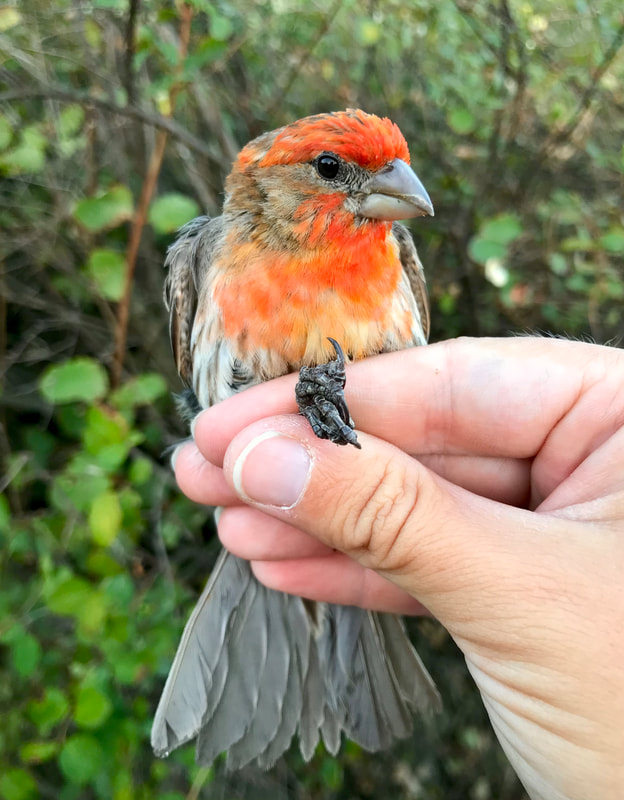
  • House Finch

    Picture

    Species: House Finch
    Most recent capture date: 6/15/2022
    Age: at least one year old
    Sex: male

    Notes: House Finches are an all-or-nothing proposition: you either catch none, or you catch a lot. On this day we caught seven of them because a flock had settled near the nets to eat thistle seeds. In the early banding days of CCFS, it was common for them to catch 20+ at once.

    Read More


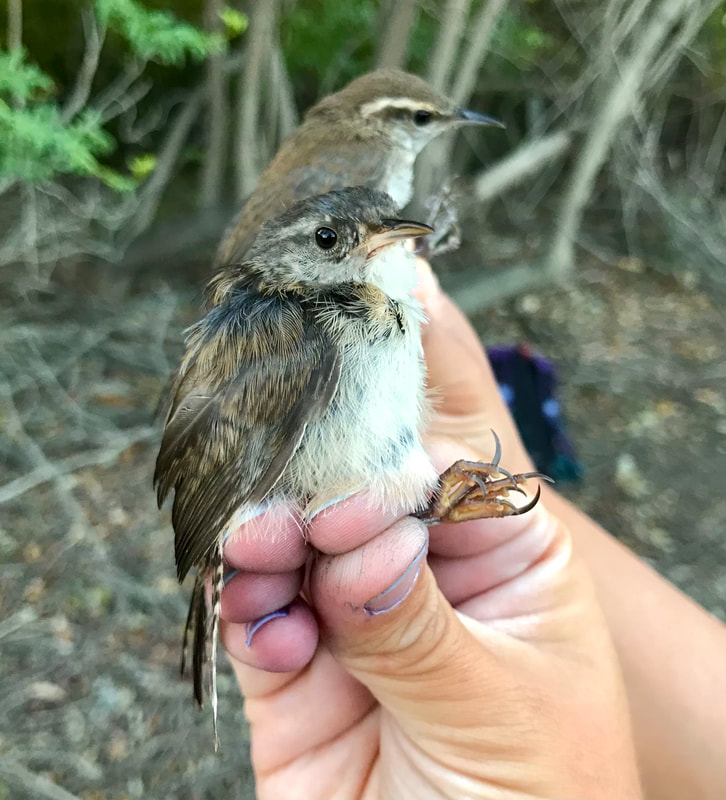
  • Marsh Wren

    Picture

    Species: Marsh Wren
    Most recent capture date: 6/12/2022
    Age: less than four months old

    Notes: In a season when I take data on many juvenile Bewick’s Wrens, this young wren looked a little off to me. It was still growing in most of its feathers, making it scruffy and hard to ID, but comparing it to a Bewick’s Wren we caught at the same time (in the background of this photo) made it clear that the two birds were different. After a bit of puzzling I finally noticed the characteristic mottled back of a Marsh Wren. You have to stay alert in bird banding: you never know when “another baby wren” will be something unexpected.

    Read More


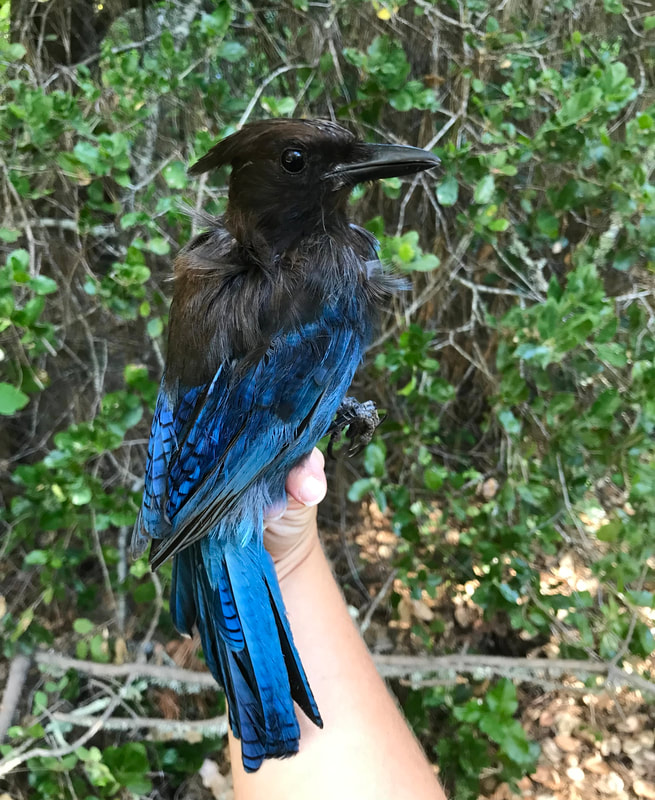
  • Steller’s Jay

    Picture

     Species: Steller’s Jay
    Most recent capture date: 6/10/2022
    Earliest capture date: 5/10/2019
    Age: at least five years old

    Notes: These raucous, social birds don’t come to our CCFS site, but they are numerous at some of our newer banding sites. We see and hear them much more often than we catch them.

    Read More