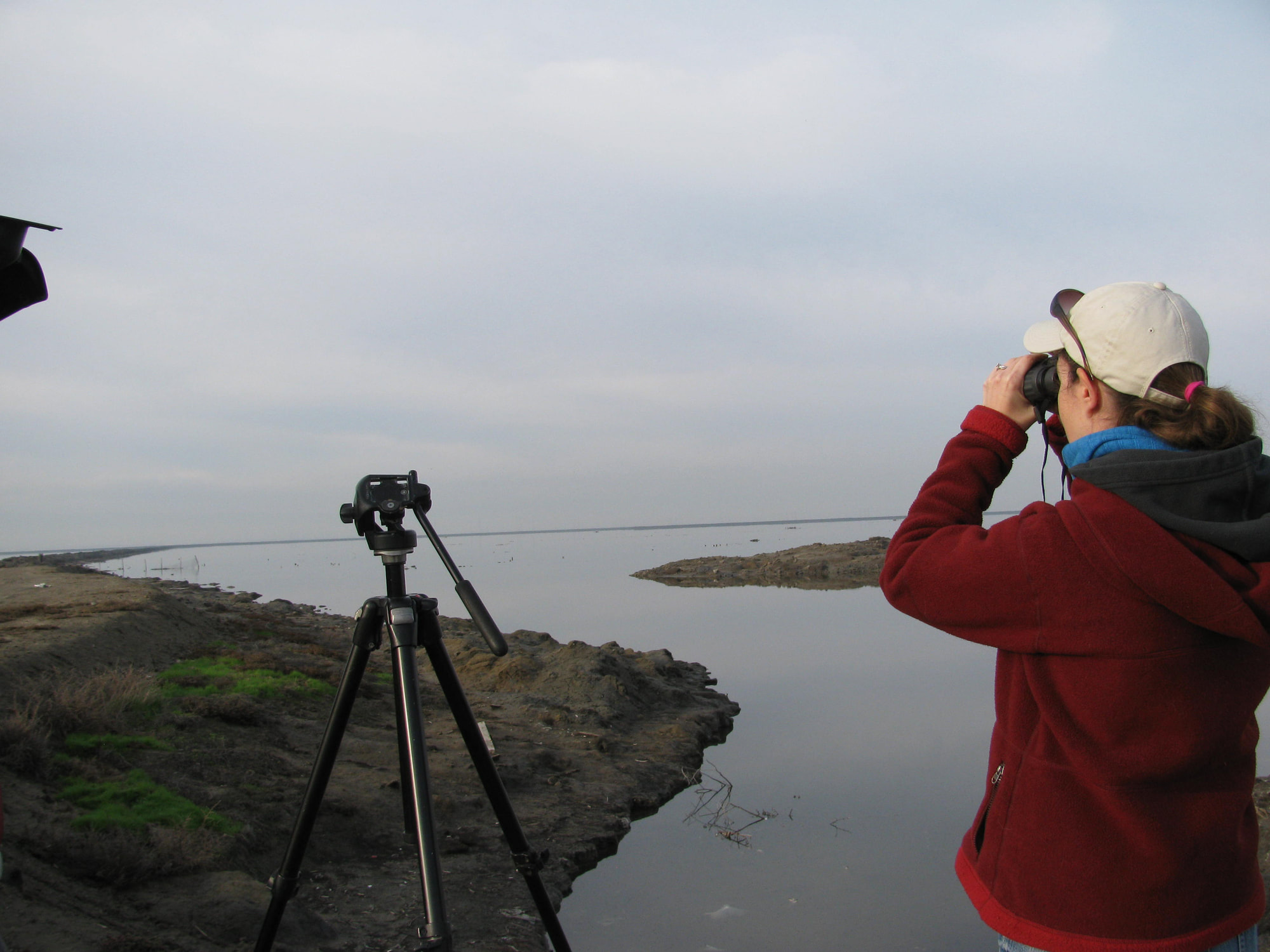

Scientists have identified the two biggest threats to biodiversity as land use change (which has driven historical extinctions) and climate change (predicted to drive the greatest future extinctions). As a bird observatory in a major metropolitan area, understanding how the loss of 90% of historical tidal wetlands in the Bay Area has impacted birds has always been a central focus of SFBBO’s research. And many of our programs are studying the impact of climate change on birds—from the threats facing phalarope habitats under the worsening droughts to impacts on the timing of migration in songbirds.
But climate change is bigger than the impact on bird species, affecting both nature and society in myriad ways. The impacts on social systems can in turn alter processes of land use change. For example, a major reason the South Bay Salt Pond Restoration Project is restoring tidal wetlands is not just to create habitats (though this is important!) but also to buffer our human communities against flood risk under sea level rise.