Wingbeat Blog

The most recent stories about our science and outreach work

  • Kids Bird Art Contest 2023

    by Environmental Education Specialist & Biologist Sirena Lao
    Picture

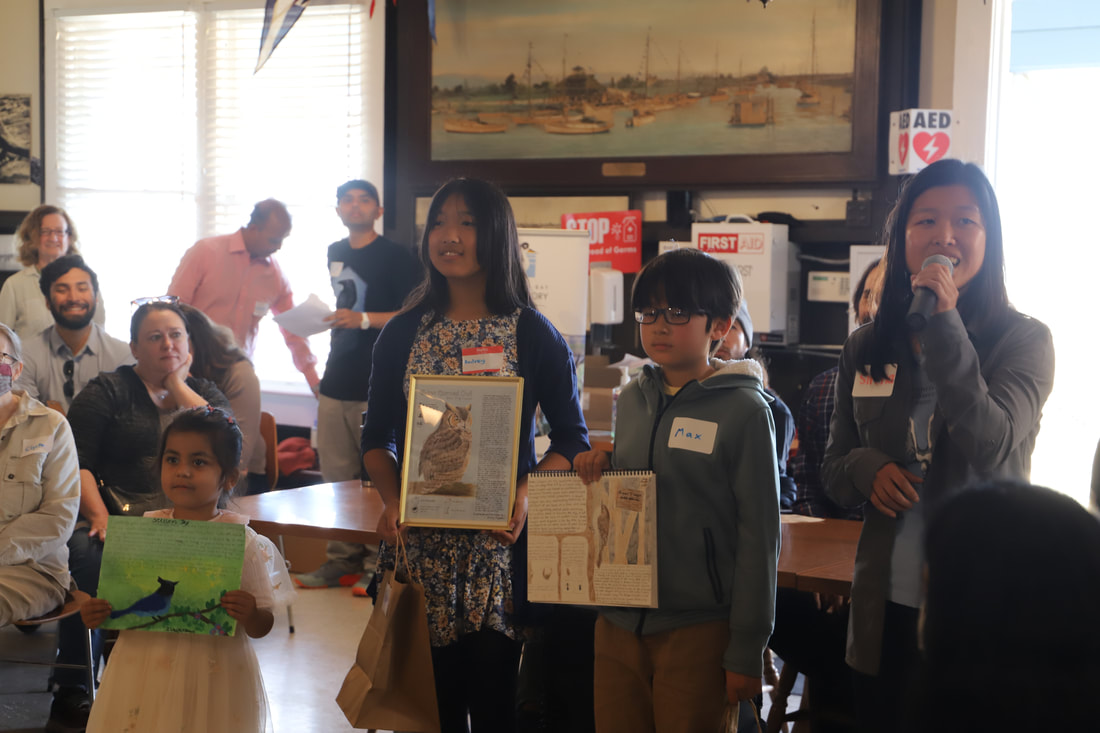
    Each year, SFBBO hosts a Kids Bird Art Contest where we invite children ages 3-17 to spend time outside, observe birds in nature, and record their observations in the form of art and writing. With our renewed mission statement, we wanted participants to help promote a sustainable future for birds. We asked kids to create artwork reflecting a memorable experience they have had with birds in nature, do research about the threats birds face, and write about how people can help birds…
    Read More


  • CFC Banded Snowy Plover Resighting!

    SFBBO Science Director Maddy Schwarz
    Picture

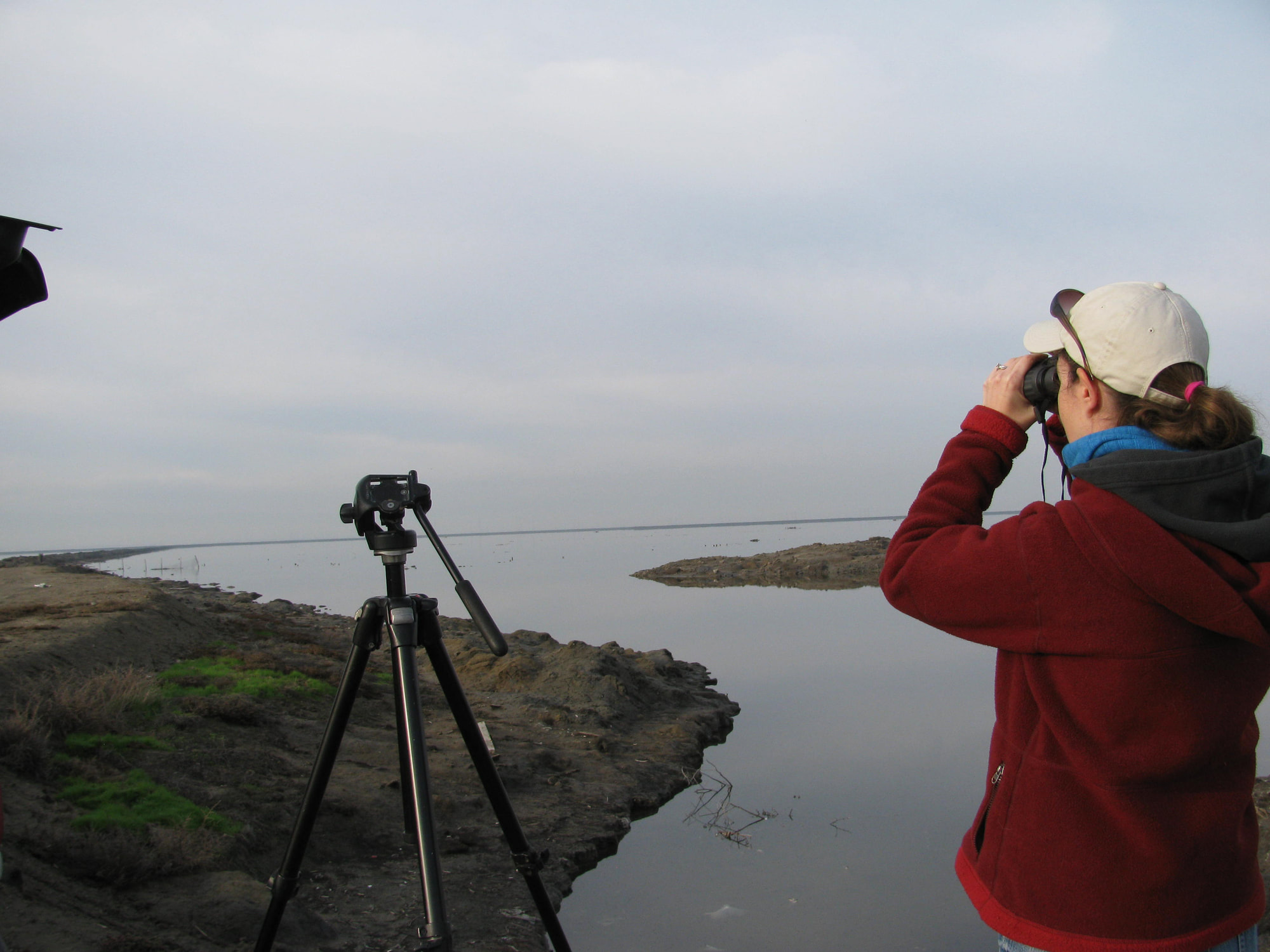
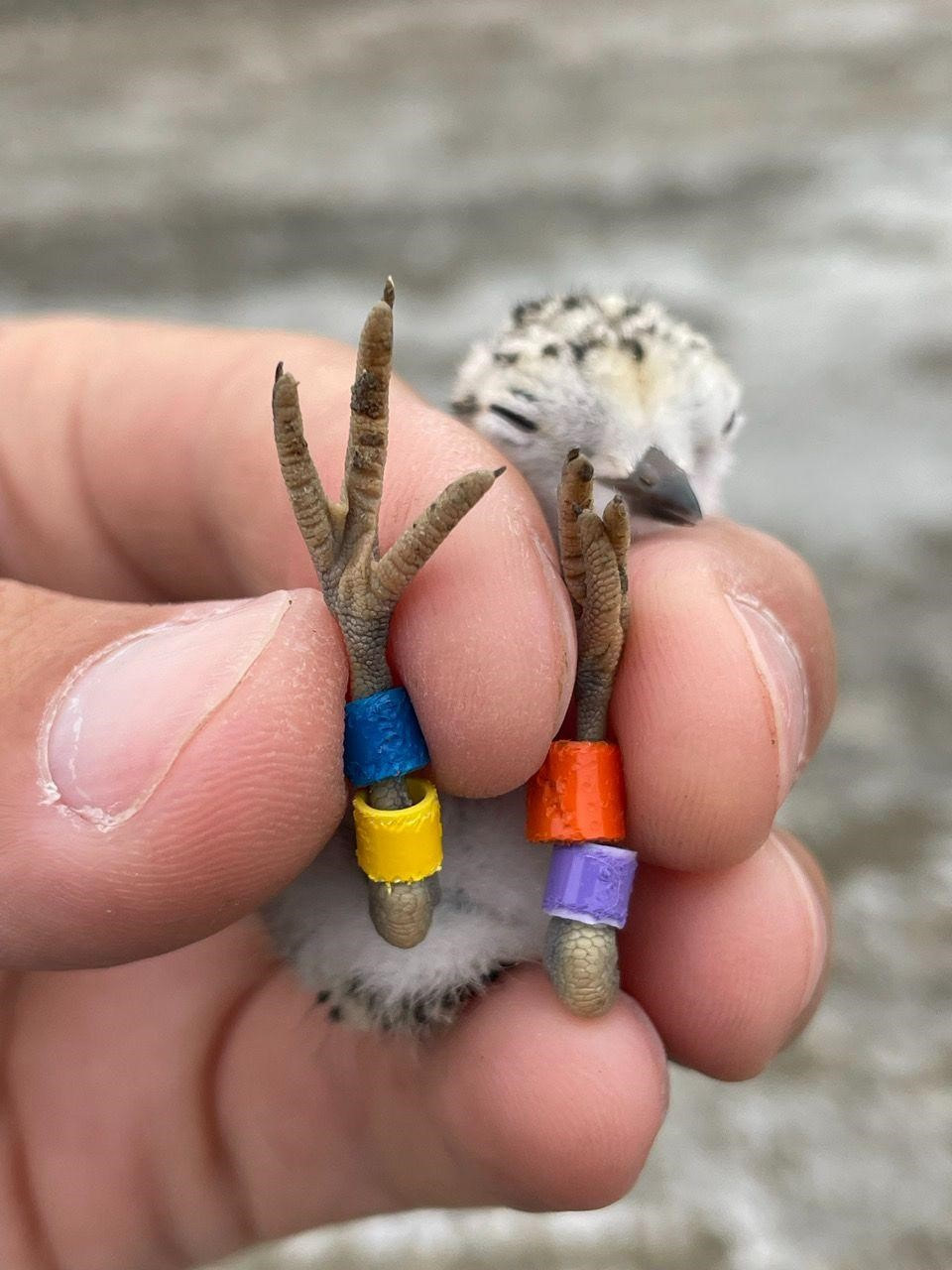
    For 20 years, SFBBO has surveyed the Western Snowy Plover, a federally listed species that usually lives on beaches but has found a home on the dry salt pond beds along our Bay. Because of it’s protected status, the U.S. Fish and Wildlife Service has set goals to restore plover numbers throughout the region. In addition, the South Bay Salt Pond Restoration Project, a 50-year effort to return half of the Bay’s salt ponds back to tidal marsh, has also established goals to increase plover numbers in the Bay Area. SFBBO is a part of a range-wide effort to study and help these birds by improving their habitat and banding and re-sighting them to learn where they go. As part of our 2023 California Fall Challenge (CFC), for the next four …

    Read More


  • Student Gains Confidence with Focusing and Storytelling Through Photography Workshop

    By Guest Blogger Maya Xu
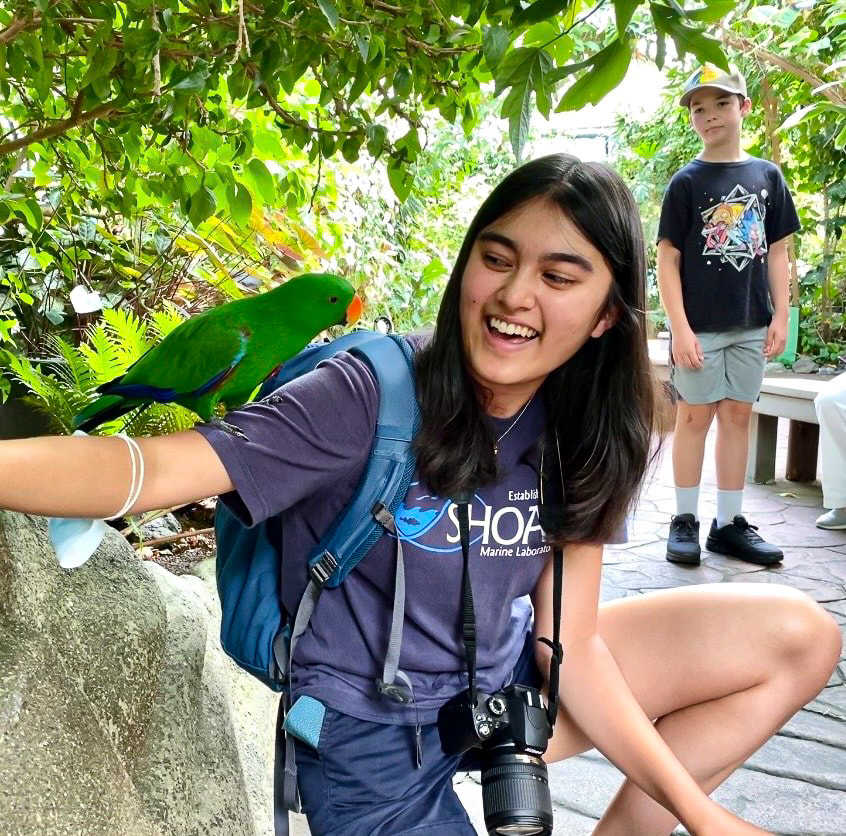
    A photo of Maya Xu with a camera around her neck and a parrot on her arm

    “How do you tell the story of the bird?” That was the biggest takeaway I had from Sebastian Kennerknecht’s photography workshops.

    I first got bitten by the photography bug after taking a freshman introductory seminar in conservation photography with Stanford’s Professor Sue McConnell. I’d spent years taking questionable iPhone photos of birds through my binoculars, and I’d originally gone into the class thinking I’d leave with the skills to take better photos with my dad’s old DSLR (a Nikon D60, which I still love.) I left with a completely new understanding of how photography could be used to touch people’s hearts and inspire them to take part in conservation efforts…

    Read More


  • On the Board Walk: Meet Anshuman Mohapatra

    Picture

    My inspiration and love of nature started with visiting Yosemite Valley – the pulverized scenery, astounding cliffs, and majestic waterfalls. Undoubtedly what has always enhanced my experience in the parks is the chirping and singing of birds and the vibrant array of colors they bring to life. “My First Summer in the Sierras” by John Muir infused in me immense love for nature and a strong desire to protect wilderness. The works of John Muir and George Bird Grinnell inspired me to start volunteering and supporting various conservation efforts both in National Parks and our local Bay Area parks and wildlife sanctuaries.

    ​I started participating in trail watch programs at Vasona Lake and Los Gatos Creek county parks a couple of years back. I’ve been fascinated and hugely rewarded by encountering the diversity of wildlife along the

    Read More


  • Phalarope Festival

    By Science Director Nathan Van Schmidt
    Picture
    Last month, I spoke about SFBBO’s research on phalaropes at the Mono Basin Bird Chautauqua in Lee Vining, California. Every year, conservationists with Mono Lake hold the Chautauqua as a special birding event with field trips and talks to celebrate the unique birds of Mono Lake and the eastern Sierras. This year was a particularly special event, hosting a “Phalarope Festival” to bring together scientists from across North and South America to host the first group meeting of an amazing collaboration we’ve built, the International Phalarope Working Group.

    Phalaropes are very unique and understudied shorebirds. They’re small like a sandpiper, but unlike sandpipers that forage by probing in the mud, they prefer to herd prey by swimming in tight circles. There are only three species, which are exclusively found in the Americas: the Wilson’s Phalarope, the Red-necked Phalarope, and the Red Phalarope. While the Red Phalarope spends its time out at sea, the Wilson’s Phalarope and the Red-necked Phalarope are even more unusual in that they specialize in hypersaline lakes. … 

    Read More


  • Keeping the Balance

    By Guest Blogger Wendy Gibbons
    Picture
    “When we try to pick out anything by itself, we find it hitched to everything else in the Universe,” wrote the naturalist and environmental philosopher John Muir in his 1911 book My First Summer in the Sierra. Muir’s eloquent expression of the central challenge of ecological research captures beautifully the daily work that comprises SFBBO’s bread and butter.

    ​The full depth and breadth of the organization’s mission can be challenging to describe in one web page, newsletter, or research article. For example, this spring, SFBBO scientists and volunteers contributed to local and national efforts to understand microplastics in avian diets, waterbird use of salt ponds, nesting behavior in raptors, and pollination by songbirds. 

    Read More


  • On the Board-Walk: Meet Bruce Paton

    By Guest Blogger & SFBBO Board Co-Chair Bruce Paton
    Picture
    Bird photography was key to my mental health during the pandemic. Some of my calmest moments the past few years have been spent at the edge of the Bay. I’m a passionate bird photographer, and my camera has helped me first to see birds and then to learn about their behavior and their habitats.  

    Professionally and personally, I have spent several decades working on sustainability. In particular, I have been working and writing to help communities limit and reverse the damage from climate change. 

    “Sustainability”, “environment” and even “climate change” are abstract concepts, but watching a Great Egret take off always takes my breath away.

    Read More


  • Teen Volunteers Use Colonial Waterbird Data to Investigate Effects of Flora on Bay Area Birds

    By ​Teen Volunteers Peter Covert, Lara Tseng, and Yunjiao (Grace) Xiao
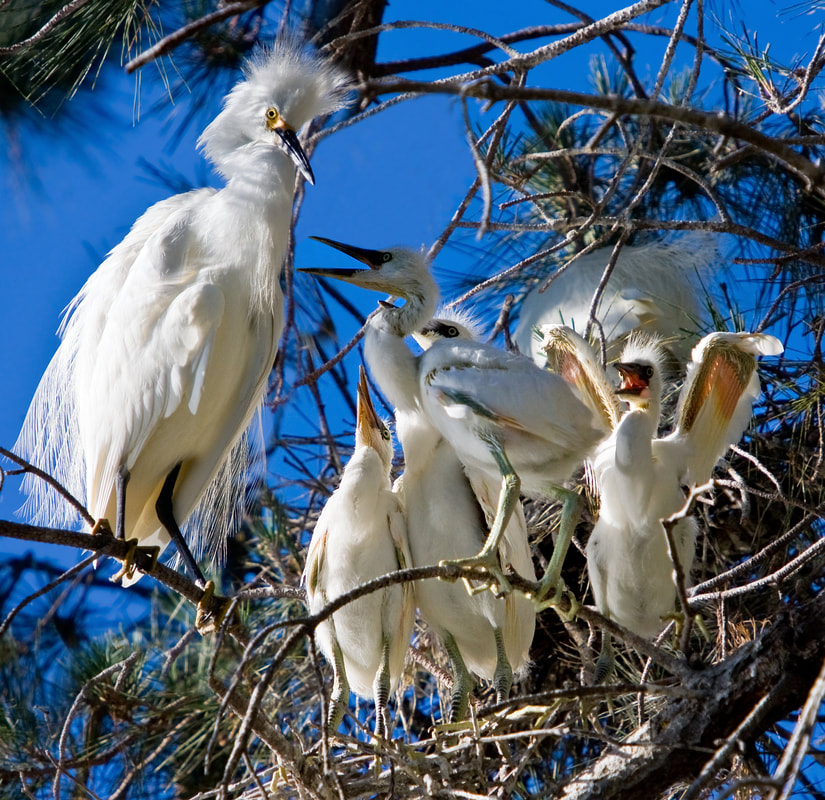
    A family of Snowy Egrets, including one visible adult, an adult hidden in the back, and four juveniles.

    Back in the days of the global shelter-in-place, Nani Welsh, a Science Outreach Intern at SFBBO, created a program bringing together the teenage volunteers at the organization. The idea was to foster a community for teens interested in bird science and conservation and provide mentorship and opportunities to work together through research and outreach projects. Nani reached out to us teens directly, inviting us to be a part of this new program. Virtually gathering together nine of SFBBO’s teen volunteers, we became the first members of the Teen Volunteer Program.

    Read More


  • Birds, Data, and Taco Dinners: SFBBO Research Represented at Western Bird Banding Conference

    By Guest Blogger Wendy Gibbons
    Picture
    The joys of sharing scientific research, bird banding, and gathering over taco dinners proved irresistible to adventurers in the world of avian conservation science, including SFBBO senior landbird biologist Dan Wenny, research affiliate Julian Tattoni, and volunteer Wendy Gibbons, this May. Wenny, Tattoni and Gibbons experienced this winning combination during the 2023 meeting of the Western Bird Banding Association (WBBA) meeting outside of Santa Clarita, California. The WBBA is a scientific organization that encourages and promotes bird banding as a tool to study the biology and migration of western birds. 

    The three made the trip south from the Bay Area to join over 40 other bird banders from the western United States and Canada, including Alaska, Colorado, Oregon, and Idaho. 

    Read More


  • On the Board-Walk: Meet Debbie Wong

    By Guest Blogger & SFBBO Board Member Debbie Wong
    Picture
    “Wow, hello handsome!” I was talking to the male Townsend’s Warbler that I took out of the bag. It is always a mixture of mystery, surprise, and anticipation when processing (and banding) a bird that you didn’t personally extract from the mist net.

    This gorgeous male (see photo below) that we met on February 8 was the first of its species we saw this year, a sign of spring. After so many cancellations and delays due to recent rain and cold temperatures, SFBBO’s Coyote Creek Field Station, CCFS, where I have worked as a volunteer bander for over 20 years, is slowly resuming its operation.

    Read More