
By Outreach and Communications Director Kristin Butler

The Colonial Waterbird Program is one of my favorite research projects at SFBBO. As one of our two longest running avian studies, it has produced a continuous data set that reaches back to the early 1980s. In addition, the project has covered vast geography from Morgan Hill to Alameda, from Pescadero to Livermore, and throughout most of the cities in between. This kind of information is rare and powerful because it tells us an important story about our region’s birds over time and gives us a chance to make decisions …
… that protect them. This enormous work is only possible because of our wonderful army of citizen science volunteers.
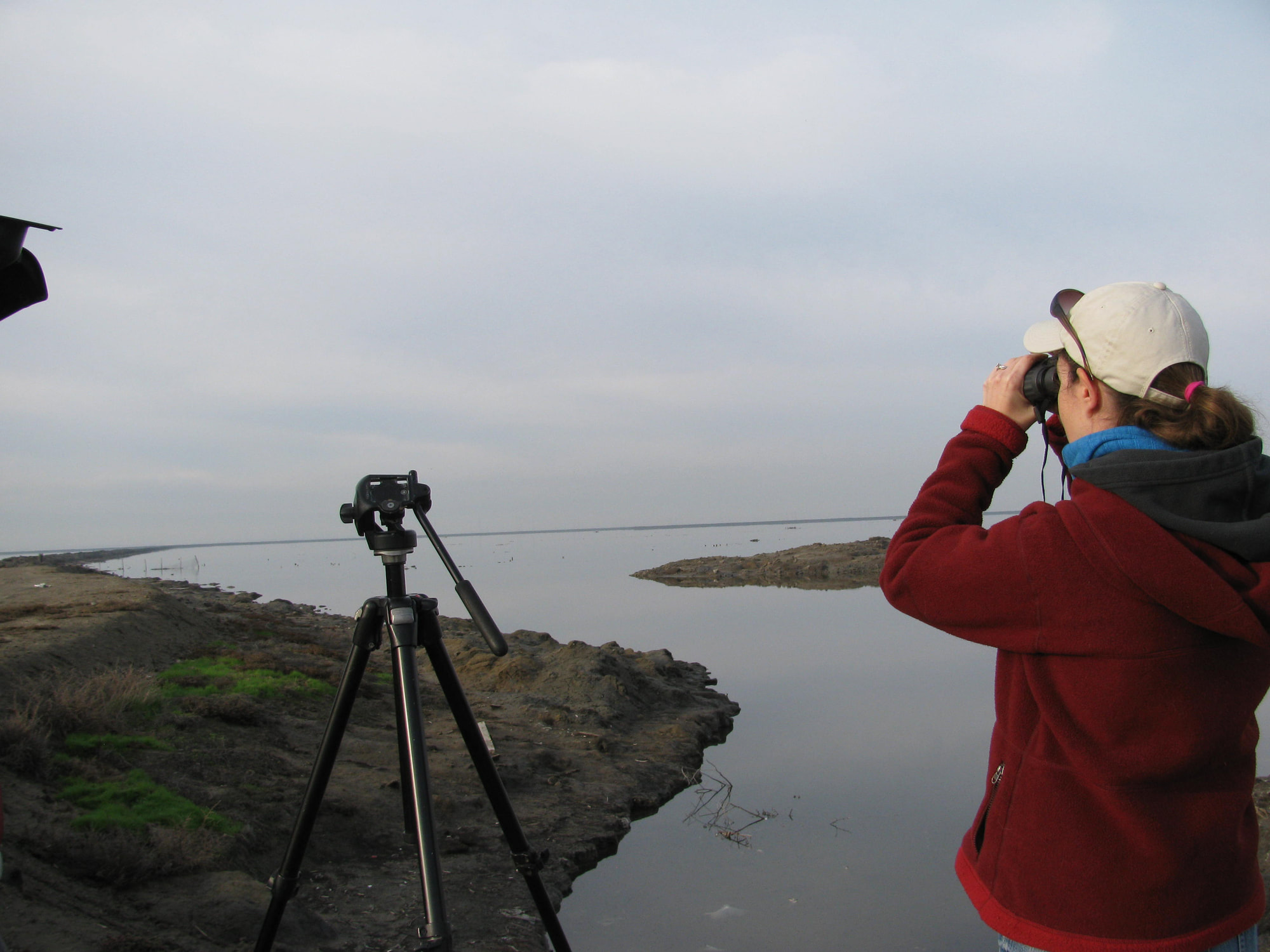
In 2018, the latest contingent of 67 volunteers donated 912 hours to monitor 62 potential colonies, 52 of which were active. Together they monitored 17 gull, tern, and shorebird colonies and 35 heron, egret, and cormorant colonies.
In addition, in May they helped our staff conduct walk-through surveys of 10 colonies of the most abundant waterbird species in the Bay Area: California Gulls. We’ve seen an exponential increase of this species since 1980 and are tracking how these changes impact other species like Western Snowy Plovers.
In addition to its important contribution to science, I like the Colonial Waterbird Program because it educates the community about the wonder and importance of birds. Each year, volunteers in the program help me teach kids and families about avian science by leading hands-on activities at family science events at libraries and schools around Bay, and they share their data with the public at special Birds in Your Neighborhood events at their colony sites. By connecting people to the birds that live among them, our volunteers help create more support for bird conservation, which is our ultimate goal.
For more information about the 2018 results, please visit our CWB website. To meet some of our tenacious volunteer watchdogs and bring an event to your neighborhood, library, or school, please contact us at [email protected].
In 2018, the latest contingent of 67 volunteers donated 912 hours to monitor 62 potential colonies, 52 of which were active. Together they monitored 17 gull, tern, and shorebird colonies and 35 heron, egret, and cormorant colonies.
In addition, in May they helped our staff conduct walk-through surveys of 10 colonies of the most abundant waterbird species in the Bay Area: California Gulls. We’ve seen an exponential increase of this species since 1980 and are tracking how these changes impact other species like Western Snowy Plovers.
In addition to its important contribution to science, I like the Colonial Waterbird Program because it educates the community about the wonder and importance of birds. Each year, volunteers in the program help me teach kids and families about avian science by leading hands-on activities at family science events at libraries and schools around Bay, and they share their data with the public at special Birds in Your Neighborhood events at their colony sites. By connecting people to the birds that live among them, our volunteers help create more support for bird conservation, which is our ultimate goal.
For more information about the 2018 results, please visit our CWB website. To meet some of our tenacious volunteer watchdogs and bring an event to your neighborhood, library, or school, please contact us at [email protected].

Kristin Butler is the Outreach and Communications Director at SFBBO. She writes about science and the environment and her work has appeared in The Argus, Bay Area Business Woman News, Tideline, All Bird Bulletin, and Birdwatching Magazine, and on national blogs including SciStarter, P.L.O.S. CitizenSci, and Discover’s Citizen Science Salon. You can reach her at kb[email protected].