• On the Board-Walk: Meet Debbie Wong

    On the Board-Walk: Meet Debbie Wong
    By Guest Blogger & SFBBO Board Member Debbie Wong

    Picture

    “Wow, hello handsome!” I was talking to the male Townsend’s Warbler that I took out of the bag. It is always a mixture of mystery, surprise, and anticipation when processing (and banding) a bird that you didn’t personally extract from the mist net.

    This gorgeous male (see photo below) that we met on February 8 was the first of its species we saw this year, a sign of spring. After so many cancellations and delays due to recent rain and cold temperatures, SFBBO’s Coyote Creek Field Station, CCFS, where I have worked as a volunteer bander for over 20 years, is slowly resuming its operation.


    PictureMale Townsend’s Warbler

    Granted, the damage and aftermath of the winter rainstorms are still with us (it’s still muddy and too slippery to walk in some net lanes), but banding has partially resumed.

    My motivation to become a bird bander was sparked by my love of birds. My continuous commitment is renewed by the big data and the big picture that bird banding information helps us to understand about birds, their habitat, the effects of climate change, and the interconnectedness on the blue planet we all live on. We are all earthlings, like the birds, and borders and nationalities don’t matter when it comes to the earth’s wellbeing. 

    CCFS is just one of the programs at the San Francisco Bay Observatory, an organization that has been operating in the South Bay for over 40 years. We also conduct other avian research, do tidal marsh restoration, carry out bird colony surveys and monitoring, offer educational programs for school kids, and make our research and data available to university students. SFBBO is a place where everyone can help, can participate, if you have a few hours to spare. Don’t miss our amazing Birdy Hours where science is discussed in a fun and lively manner.

    My decades of affiliation with SFBBO began in volunteerism with avian disease prevention. Like so many other volunteers, once you get to know more about SFBBO and its various missions and programs, one can’t help but to participate more. I didn’t know my volunteering as a bird bander would last over two decades, and I didn’t expect to join the Board, as I did in 2021, but I am glad to contribute my experience in high tech management as the Secretary of the Board and as a member of the Board Executive Committee. With the team effort from other Board members, we strive to maintain the core values of SFBBO and to venture into new areas to meet rising challenges, including the impacts of climate change and the need for environmental justice. 

    After two years on the Board, I am honored and impressed to be working side by side with other Board members, dedicated staff members, and countless volunteers who made SFBBO what it is today. Change is constant. SFBBO isn’t the same as it was 20 years ago, and that’s a good thing. We are currently working on a Strategic Plan for the next few years. We value your opinion and your participation in shaping our efforts to promote sustainability in the Bay Area and beyond. For more information about how to get involved, please visit our website at localhost:8881/.


  • On the Board-Walk: Meet Shubha Tuljapurkar

    On the Board-Walk: Meet Shubha Tuljapurkar
    By Guest Blogger & SFBBO Board Member Shubha Tuljapurkar

    Picture

    As a nature photographer, I often visit the Don Edwards Wildlife Refuge in Alviso. Early one morning, I was photographing a crowd of Snowy Egrets, Great Egrets, and gulls feasting and frolicking at high tide. I marveled at how lucky I was to enjoy that sight within ten miles of where I lived, and that’s when it hit me. If we didn’t protect our habitats from the pressures of climate change and people, these birds may not be frolicking here in the future. I resolved to get involved.
     
    I looked for ways to leverage my background in marketing and management in the technology industry, and my previous leadership positions at several Bay Area start-ups and at nonprofit organizations promoting digital literacy at underserved schools in California.

    I found SFBBO while researching conservation and birding nonprofit organizations in the area. Their focus on birding research and conserving and reclaiming the tidal marsh habitat appealed to me. And I could serve them by helping the organization increase the visibility of their mission in the Bay Area community, and by participating in strategy development at the board level.
     
    In the past year, I have seen bird banding in action at the Coyote Creek Field Station, where we hosted a field trip for middle school children with an education partner, Marshmallow Minds. The children were thrilled to see the birds up close, and I could see several bird researchers and conservationists in the making. SFBBO’s education outreach program is growing, and we hope it will be a strong force in shaping young minds to be conscientious in saving the environment. I have learned a lot about the effects of climate change on bird populations in our area, as with the endangered California Least Terns SFBBO scientists observe and monitor at the Eden Landing Ecological Reserve.
     
    SFBBO’s Birdy Hour talks are excellent deep dives into the behavior of various bird species. I am impressed by the dedication and expertise of the team of scientists on SFBBO’s staff, and their research on waterbird and other species.
     
    I joined SFBBO’s fund development committee and look forward to helping them expand their industry connections and funding from corporate sources, as well as increasing awareness and donors in Silicon Valley. 
     
    Get involved in bird research and conservation; SFBBO has numerous volunteer opportunities which are fun and get you connected with nature. 
  • Young Author Works to Protect Nature

    Young Author Works to Protect Nature
    By Guest Blogger Kelsey Sweetland
    Picture

    Every Saturday and Sunday morning, my family and I make waffles and play our favorite board games. We throw the doors to our forested backyard wide open and let the sound of the rustling oak trees, chirping birds, and warm sunlight filter into our house. We play games about space exploration, strategy, ancient civilizations, and much more. One day we bought a new board game called Wingspan. As we played, we learned about beautiful, colorful, and fascinating birds that live all around the world. This quickly became one of our favorite games, and we grew more aware of the woodpeckers, songbirds, and hawks living around us.

    I have loved nature from as early as I could remember. …

     I grew up watching nature documentaries such as Blue Planet and Planet Earth, where I learned about diverse and unique animals and ecosystems. In 6th grade, I started to become aware of climate change and how it was severely impacting land and ocean ecosystems. I listened to Dr. Silvia Earle’s TEDTalk about the importance of our oceans, and I was stunned to hear that in the last 50 years we have lost 90% of the big fish in the sea and 50% of our coral reefs! 

    I went to Hillbrook School in Los Gatos from first to eighth grade. One of my favorite parts of Hillbrook was a social change program called Reach Beyond Week. During this week, Hillbrook creates student groups that learn and take action about social issues like climate change, hunger, the homeless population, and much more. This is a time for students to take a risk and reach beyond what they currently know.


    When I was in 6th grade, The Scott Center for Social Entrepreneurship organized a trip during Reach Beyond Week to the Island School in the Bahamas. I was one of three students from my grade who went. None of my friends signed up, no other girls signed up, but I decided to go anyway. At the Island School, I learned how ocean ecosystems are in critical danger from rising ocean temperatures and pollution and how I could live sustainably to better support the ocean. 

    Before the trip was even over, I was an enthusiastic ocean activist and I wanted to raise awareness about the issues the ocean was facing. I have always loved to draw and paint, and I love creating stories. So, in 7th grade during the COVID-19 lockdown, I combined these passions and created my first children’s book, Natalie the Narwhal, which raises awareness about the dangers our oceans are facing. I decided to donate a portion of my proceeds to Sylvia Earle’s organization, Mission Blue. I dedicated Natalie the Narwhal to my family and to Mission Blue.
    In 8th grade during Reach Beyond Week,  I wanted to find another workshop that focused on nature and animals. Sure enough, when I looked at the list, I saw “Learning about Birds and Wetlands with the San Francisco Bay Observatory.” I was very excited to learn more about birds, so I immediately signed up. While sitting at my desk on Zoom (we were still required to be in quarantine), Marshmallow Minds and the SFBBO teamed up to teach my Reach Beyond block about the issues birds were facing. In the workshop, I learned that tall buildings and windmills cause massive bird strikes every year, and I also learned how birds are facing habitat loss along their migration paths. I had so much fun working with Marshmallow Minds and the SFBBO to learn about birds and what I can do to protect them.

    That same year, Hillbrook implemented a new 8th-grade class called Social Impact and Leadership (SIL), where students identify social issues in their community and create projects to raise awareness about them. After hearing about the serious risks birds were facing from SFBBO I knew what my Social Impact and Leadership project was going to be: a new children’s book that raised awareness about birds. During my SIL classes, I wrote, illustrated, and self-published my second book, Elliot the Egret. Elliot is a snowy egret who goes on a quest to find a new home because his habitat was polluted. On the way, Elliot meets loyal friends and encounters many unexpected surprises. Elliot the Egret advocates for the importance of birds, the dangers they are facing, and what we can all do to help. Like Natalie the Narwhal, I donate a portion of my proceeds to environmental nonprofits protecting birds and their ecosystems. I am very thankful that Marshmallow Minds and SFBBO came to my school so I could learn about the issues birds face today. 

    Last year during my freshman year, I published my third book, Ozzy’s Adventure, which raises awareness about the dangers Monarch butterflies face and how they are critical to our ecosystems. I am currently working on my fourth book, Suzie’s Seagrass, which talks about the importance of seagrass, mangroves, and how manatees critically need our help. My books are selling on Amazon and Barnes and Noble, and it makes me so happy to know that I can raise awareness for environmental issues.
        
    To this day, Wingspan is one of our favorite board games to play during family waffle morning. As we eat our waffles and play our favorite board games, I love to listen to and admire the tiny birds chirping and busily foraging for food in our backyard. After meeting with the San Francisco Bay Bird Observatory and writing my book about birds, I know I will love and protect birds forever.

    Kelsey Sweetland  is a 15-year-old author who has published three children’s books that advocate for environmental issues. She loves the outdoors and is a passionate protector of nature. She donates a portion of each book purchase to organizations that protect animals and their habitats. You can find her  books on Amazon and at Barnes and Noble!
  • 2022 Kids Bird Art Contest

    2022 Kids Bird Art Contest
    by Education and Outreach Specialist Sirena Lao
    A young girl holding up her bird artwork

    SFBBO’s Kids Bird Art Contest is a fun annual contest where we invite kids ages 3-17 to spend time outside, observe birds in nature, and record their observations in the form of art and writing. This year, to continue celebrating SFBBO’s 40th Anniversary, we asked kids to recall a memorable experience with birds in nature and to create a drawing and written story reflecting that encounter.

    We were incredibly impressed by the submissions! Many of the kids who participated demonstrated wonderful artistic skills and attention to detail, and many were also talented storytellers! We received 90 entries, and our judges loved seeing everyone’s artwork and reading the stories. We were happy to see that so many kids are noticing birds and have made meaningful connections with nature. Seeing that the next generation is inspired by nature makes us hopeful for the future of birds and their habitats!

    We are very excited to share this year’s winning entries! The winning entries for each category are:

    • Age 3-7: Nikita Mylavarapu – American Coot (pictured below)
    • Age 8-11: Audrey Papasin – Snowy Egret & Great Egret (pictured right)
    • Age 12-17: Celine Park – Steller’s Jay (pictured below, right)

    Click on each image to enlarge and read their stories!

    Artwork of a Great Egret and a Snowy Egret
    Drawing of an American Coot
    Painting of a Steller's Jay


    ​Because there were so many wonderful entries and the top pieces of artwork were so close, we also want to recognize those who came in 2nd place: 

    • Age 3-7: Olivia Chen – Western Bluebird
    • Age 8-11: Joshua Chan – Long-eared Owl
    • Age 12-17: Grace Xiao – Black-chinned Hummingbird

    Congratulations to all the winners!

    There were of course many more wonderful pieces that came close to winning than we can highlight here. You can see all of the great artwork we received this year by checking out this photo album on our Facebook page

    Painting of a hummingbird with honeysuckle flowers
    Artwork of a western bluebird sitting on a branch
    Artwork of a long-eared owl sitting on a branch
    In addition, many artists submitted optional photos of themselves holding up their artwork, so we wanted to share a collage highlighting these amazing young artists. We hope everybody who participated in the contest continues to tell stories, create art, and nature journal!
    Collage of photos of children holding up their artwork
    ​Thanks so much to everyone who participated in the contest; to the volunteer art contest judges, Judy Mol and Kat McCollough; to Helen Gong for having so many of her students participate; to Christine Zack for donating prizes for the winners; and to the Oakland Zoo and CuriOdyssey for donating museum passes for our random prize drawing! We can’t wait to see next year’s entries!
  • On the Board-Walk: Meet Lynne Trulio

    On the Board-Walk: Meet Lynne Trulio
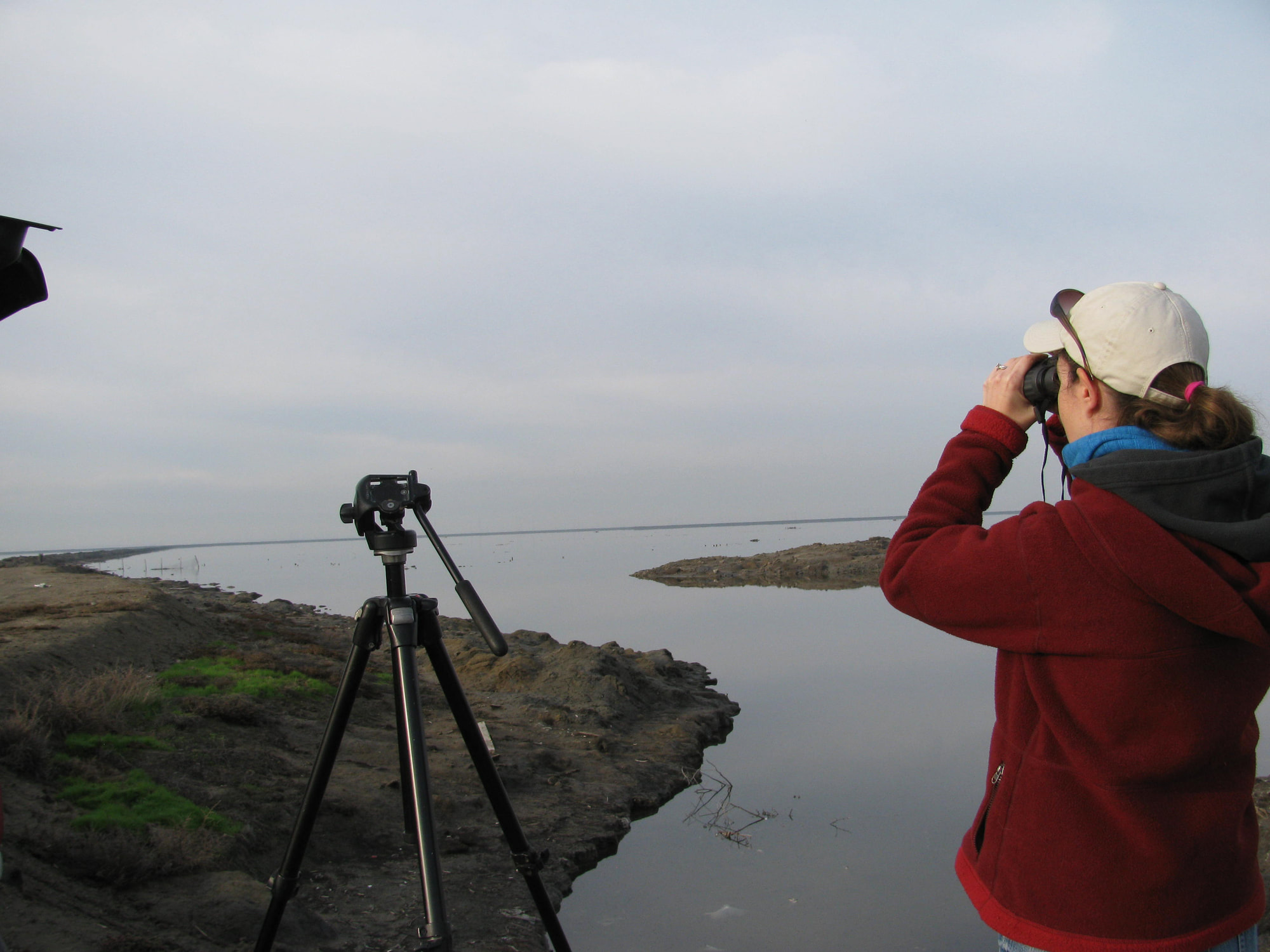
    By Guest Blogger & SFBBO Board Co-Chair Lynne Trulio, PhD

    Picture

    I’m a South San Francisco Bay gal and a researcher who studies birds. For many years, there was very little research occurring in our region, which was very distressing to me. But, there was one research group working hard to understand the South Bay and educate people about its beauty—and that group was SFBBO! I naturally gravitated to SFBBO and learned about SFBBO’s many great programs including the colonial waterbird and avian disease programs, both of which continue today. 

    Another aspect of SFBBO that I have always thought was amazing is the Coyote Creek Field Station, a long-term bird banding station in Milpitas that is providing critical information on how resident and migrating birds are doing. As a professor at San José State University, I have brought my students to the field station, had them do research on the restoration of the habitat, and have graduate students who wrote master’ theses using bird banding data from the field station. 


    Today, the bird banding station—while providing valuable data on how birds are doing in our changing world—is also part of a large-scale education project called SOAR that will bring hundreds of college students out to the field station and into the world of birds.

    While for many years my connections with SFBBO were research and education-based, a few years ago I realized I needed to do more for SFBBO–and so I became a board member. This is a volunteer position in which board members work to support our programs and the fiscal health of the organization. I love being on the Board (I’m in my third term!) because this position allows me to help with all aspects of SFBBO’s mission – research, education and outreach. You can read more about our Board on SFBBO’s website. If you’ve ever thought of being on our board, I’d be happy to talk with you about this incredibly rewarding work. 

    But, if being on the Board is not for you, don’t worry, there are so many other ways to help SFBBO continue its amazing mission, including getting out into nature and making a difference for birds at outreach events and by volunteering. And, because SFBBO is a non-profit, donations are essential to our financial health. I hope to see you at an SFBBO activity soon!

  • SFBBO Biologists Release Four Juvenile Snowy Plovers

    SFBBO Biologists Release Four Juvenile Snowy Plovers
    By Education and Outreach Specialist Sirena Lao
    Looking through one of the holes of the cardboard carrier, we can see two juvenile Snowy Plovers (small grayish-tan and white shorebirds) standing on a sheet in the carrier.

    This year has been eventful so far for Snowy Plovers and our biologists who study them here in the South San Francisco Bay. Western Snowy Plovers are small, pale shorebirds that breed along the Pacific Coast from Southern Washington to Baja California, as well as inland at alkali lakes. The Pacific Coast population of Western Snowy Plovers is federally listed as a threatened distinct population segment, with about 2,500 individuals. These birds typically breed on coastal sandy beaches, but with human development and disturbance, some birds have taken advantage of former salt evaporation ponds here in the Bay, a rather stark landscape that mimics salt panne habitat found in isolated areas of the coast and interior. These salt ponds now regularly support about 10% of the Pacific Coast population.

    ​SFBBO biologists have been studying and conserving Snowy Plovers since 2003. Biologists spend long days in the field each spring and summer in conditions with no shade, sometimes strong winds, and plenty of dust and salt that coats their hands, clothes, and virtually all surfaces of our work vehicles. The biologists start by driving slowly on the levees surrounding the salt ponds, using spotting scopes to look for plover nests. Because plover nests consist of lightly decorated scrapes on the ground, spotting nests means looking for incubating plovers sitting on the ground. This is no easy feat given how well camouflaged these small shorebirds are against the landscape, aided by the many oyster shells we’ve placed to help the birds further blend in and hide from predators. 

    A Snowy Plover nest on the ground, which includes 3 spotted eggs with an oyster shell on each side.
    A Harrowing Season
    This year’s plover season got off to an early start. Each year, we begin surveying for breeding plovers in March. Our biologists did not expect to find the first chicks hatching already before the end of the month! This is the earliest hatching nest we’ve ever encountered. Only time will tell if earlier hatching will become a trend, as it has with other bird species due to climate change.
    April brought challenges for nesting plovers, as we found more abandoned nests than usual. A nest is considered abandoned when the adult plover does not return to the nest to incubate their eggs or brood their chicks. At Eden Landing Ecological Reserve in Hayward, our biologists found two freshly hatched chicks abandoned shortly after an unseasonably late rain storm. In addition to these two chicks, we found one abandoned egg close to hatching at Eden Landing and another at the Warm Springs Unit of the Don Edwards SF Bay National Wildlife Refuge in Fremont. While we don’t always know why plovers sometimes abandon their nests, we strongly suspect that the frequent storms this spring have caused higher than usual nest abandonment. With climate change expected to continue altering the timing and severity of weather events, we may see even more cases of nest abandonment in the future.

    When we find abandoned eggs or chicks, we bring them to our partners at International Bird Rescue (IBR). In the last year, IBR has successfully incubated several abandoned Snowy Plover eggs and raised chicks until they’re ready to feed themselves and fly. Our biologists then return to IBR, band the juvenile birds, and release them back into the wild. After nearly two months of caring for the two chicks and two eggs we brought to them in April, IBR sent word to our biologists that these four plovers were ready to be picked up and released.
    Release Day

    ​On the morning of Friday, June 17th, I accompanied biologists Jessica González and Josh Scullen to International Bird Rescue’s facility in Fairfield. The plan for the day was to band the four juvenile Snowy Plovers, transport the birds back down to the South Bay, and release them at the Ravenswood Unit of Don Edwards in Menlo Park, one of their primary breeding locations in the bay. 
    The IBR staff welcomed us and led us into a room with a bench where we could band the plovers. They brought the four plovers in a single cardboard pet carrier. One at a time, Jessica and Josh reached into the carrier to pull out a bird, being careful not to create too wide of an opening lest the plovers fly out. Jessica and Josh carefully placed the four bands on each bird and recorded their measurements. All the while, it was also a busy morning for IBR; while we banded the plovers, we were accompanied by the squawks and squeals of fuzzy Double-crested Cormorant chicks recently rescued from the South Bay being cared for at the bench behind us. 
    ​After the birds received their new jewelry and were secured in our cardboard carrier, the plovers began a new journey. Riding in the backseat of our vehicle for about an hour, the plovers occasionally called or scratched the bottom of the carrier. Peeking through one of the air holes in the carrier, I saw that at least one of the plovers seemed to settle in, preening and fluffing itself during the road trip. 

    ​When we arrived at the Ravenswood pond where we planned to release the birds, we met up with biologist Parker Kaye, who had been conducting plover surveys earlier that morning, and science director Ben Pearl, who manages our plover recovery program. 

    After deciding on a good spot to release the birds, we brought the carrier down the side of the levee to the dry edge of the pond bottom. Josh gently tipped the carrier to lay it flat on its side and opened it up. The four young plovers all began to take their first steps into their new life. Two of them took to the skies almost immediately, disappearing among the salt ponds. The remaining two plovers spent more time wandering and exploring, as if they were unsure of this new and foreign setting. Eventually, one of them took off while the other decided to take a short trip to the other side of the levee. This last plover found itself standing on some barnacle-encrusted rocks on the side of the levee, an unusual setting for a Snowy Plover. It finally made its way down to the bottom of the salt pond, where it began foraging and seemed to feel much more at home.
    As the Snowy Plover breeding season continues through the summer, our biologists will continue to eagerly look through scopes to read color bands of any plovers spotted, hoping to see these four lucky birds again. Our team is grateful to have played a part in giving these plovers a second chance at life.

    If you’d like to support SFBBO’s Snowy Plover recovery program and our other bird conservation efforts, we hope you’ll consider becoming a member to join our community of bird supporters.

    Update: 12/30/2022

    We are happy to report that all four of the released juvenile Snowy Plovers have been resighted since they were released! In the summer, two were seen at Ravenswood, one was observed at Eden Landing, and the last one pictured on the left below moved from Eden Landing to Frank’s Dump in Hayward Shoreline.

    Just before Thanksgiving, we received a report of one the Snowy Plovers on Monarch Beach in Dana Point pictured on the right below! We’re happy to see that it made it all the way to Southern California. As of December 30, 2022, the plover has continued to winter at the beach along with about 40 other plovers.

    Thank you to Susan Teefy and Nancee Wells for sharing photos of these birds. If you ever see a banded Snowy Plover, y
    ou can send photos and report your sighting to [email protected]. Include the location, date, number of plovers observed, and number of plovers checked for bands. Your message will go to all Snowy Plover banders across the Pacific Coast, and someone will respond within a few days to let you know the history of the observed bird!​
    Photo of a juvenile Western Snowy Plover with black over orange bands on its left leg and aqua over pink bands on its right leg. Photo by Susan Teefy at Hayward Shoreline
    Photo of a Western Snowy Plover with black over black bands on its left leg and green over pink bands on its right leg. Photo by Nancee Wells at Monarch Beach in Dana Point
  • Perry’s Journey Episode 10: Homecoming

    Perry’s Journey Episode 10: Homecoming
    By Science Outreach Intern Katrina McCollough
    Picture

    Home sweet summer home. What was all this for? This comic, this journey? Why do birds like Perry fly thousands of miles, and why do some do it twice a year? How did they know where to go? And most importantly, why are migrating bird populations in decline?

    Click on “Read More” below to check out Episode Ten and learn about Perry’s homecoming as he completes his migration journey! Click here to read Episode 9.  


    The word ‘migration’ describes periodic, large-scale movements of populations of animals. According to AllAboutBirds, “Birds migrate to move from areas of low or decreasing resources to areas of high or increasing resources.” The resources they are interested in are food and nesting locations. Not all birds migrate as far as Perry, some only migrate short distances like going up or down a mountain, others migrate a couple hundred miles. For long-distance migrants like Perry it’s common for them to move from their breeding ranges in the US and Canada, all the way down to their wintering homes in Central or South America.

    ​One of the birds Perry was modeled after was the Blackpoll Warblers which migrate up to 12,400 miles roundtrip each year, isn’t that incredible? And did you know that in preparation for winter migration, birds build fat reserves up to 40-60% of their body weight? This is their ‘energy storage’ for the long flight. Nonmigratory birds, on average, maintain a “fat load” of 3-5%, that’s a big difference! And they load up only two to three weeks before heading south. (photo by Nick Fewings)
    Perry is unique (and somewhat inaccurate) in that he did this migration alone, most birds are gregarious, meaning they enjoy company during migration (even ones that are usually solitary). Most people are familiar with the ‘flying V’s’ of geese, but smaller birds tend to flock in even larger numbers when they migrate. Have you ever seen a giant flock of birds overhead, making beautiful shapes in the sky? This is called a murmuration and it is one of the most awe-inspiring events you can experience. Check out this amazing video of kayakers catching a murmuration of Starlings above a lake.

    We know that the Blackpoll Warblers are incredible little migrators, but the bird world is full of many impressive fliers. Hummingbirds are the smallest migrating bird, at just an eighth of an ounce they can travel up to 30 miles an hour when they migrate across the Gulf of Mexico, a 600-mile journey. The Bar-tailed Godwit holds the record for the longest nonstop flight, 6,800 miles from Alaska to New Zealand. The Wandering Albatross doesn’t technically count as a migrating bird simply because it is almost always on the move (wandering, get it?), circling the Southern Hemisphere’s oceans. It can fly up to 18,000 miles between breedings. America’s Blue Grouse has the shortest migration, checking in at just under 1,000 feet, and the Bar-headed Goose is the highest-flying bird, crossing the Himalayas and reaching altitudes up to 23,000 feet. Even some species of penguins migrate proving you don’t always need to fly to get where you need to go. Is anyone feeling a little lazy after reading about these little guys? (photo by David Cousins)

    How do birds navigate during migration? 

    Full disclosure! Scientists don’t know 100% of everything about birds’ amazing navigational skills, but they’ve figured a few things out. Birds use several of their senses when migrating. They can get compass information from the sun and stars by sensing the Earth’s magnetic field, and they get information from the position of the setting sun and other various landmarks that they see. There’s also evidence that some birds, including homing pigeons, use their sense of smell. A lot of waterfowl and cranes follow pathways related to important stopover locations, places they can eat and rest.

    What’s happening to migrating bird populations?

    AllAboutBirds sums up the issue well, “Taking a journey that can stretch to a round-trip distance of several thousand miles is a dangerous and arduous undertaking. It is an effort that tests both the birds’ physical and mental capabilities. The physical stress of the trip, lack of adequate food supplies along the way, bad weather, and increased exposure to predators all add to the hazards of the journey. In recent decades long-distance migrants have been facing a growing threat from communication towers and tall buildings. Many species are attracted to the lights of tall buildings and millions are killed each year in collisions with the structures.” (Graph from New York Times)
    One major cause of the decline in migratory populations is climate change caused by global warming. Climate change leads to changes and shifts in habitats, which can cause the redistribution of birds, and in some cases a nearly complete loss of their habitats. Flying long distances involves crossing many borders between countries with varying environmental politics, legislation and conservation measures. It’s really important to have international cooperation among governments, NGOs and other stakeholders share knowledge and coordinate conservation efforts.

    Did you notice when Perry crossed the border into Mexico, then the US, then Canada? Neither did he! We humans have made these boundaries but the birds aren’t a part of that. It’s up to us to cooperate across state and international lines to protect the birds that migrate through our areas. Support international organizations that support migration corridors, migration hotspots, and any other bird conservation efforts. Every person can make a difference, whether in your community or in the world.


    For more information on national projects that are focused on conservation measures you can check out the US Fish and Wildlife Service’s page on Conservation Measures

    The Mission of Perry’s Journey – A Message from the Illustrator

    It’s important we understand that just because birds can fly over it all, doesn’t mean they aren’t affected by what’s going on down here on the ground. The population of North American birds has dropped by nearly 30% since the 1970s, that is a total of almost 3 billion birds. Gone.

    Birds are incredibly important to the balance of our ecosystems: they are essential as pollinators and for seed dispersal, particularly for native plants, and they feed on and help control a variety of critters we consider pests like insects and rodents. Bird studies teach us about climate and the environment, and the birds themselves are key indicators of environmental change. And, most simply, birds are beautiful, and they provide us with music and joy.

    The protagonist of this story, Perry, is doing his part as a bird, migrating to his northern breeding location to hopefully pass on his little brown bird genes. It’s all he can do. Perry’s Journey illustrates the important journey of birds like him across the globe, who are doing their parts to help.

    Migrating birds are disproportionately affected because they need not just one habitat, but multiple habitats that can serve as stopping points along their journeys. We call these migration corridors and it’s important that they are protected: for the birds’ sakes as well as our own. Birds like Perry can’t control what happens on the ground, or in the water and air, but we can. During Perry’s journey over the couse of ten posts, we will go into some of the main issues facing not just migrating birds, but all birds, and what you can do to help. To support SFBBO’s work to conserve birds and their habitats through science and outreach, please make a donation to our Spring Appeal!
    Picture

    Katrina McCollough is from the Bay Area and is a science outreach intern with SFBBO and the creator of Perry’s Journey. Her interest in birds stemmed from an internship she had at SFBBO’s Coyote Creek Field Station where she got firsthand experience working with the banders and volunteers at the station. That was the first time she ever held or released a bird, and she’s fallen in love with them since, and her favorite bird is the Bushtit. Previously, her interests were directed toward the ground, instead of the sky, hunting for mushrooms or insects. Katrina is currently a college student with a major in Biological Sciences, and she hopes to continue her schooling in mycology and bioremediation. 

  • Perry’s Journey Episode 9: All Wound Up

    Perry’s Journey Episode 9: All Wound Up
    By Science Outreach Intern Katrina McCollough
    Picture

    Perry is so close to the finish line but this could have been his last stop! For good! Perry accidentally got himself tangled in a pile of discarded fishing line. Once again, though, Perry lucked out, a human wandered by and, even more luckily, the human had a pair of scissors. Untangling birds is a difficult and stressful process (for both humans and birds), especially for people not trained or used to handling birds. Most birds are not so lucky though.

    Click on “Read More” below to check out Episode Nine and learn about the challenges Perry faces at the ninth leg of his journey and how you can help. Click here to read Episode 8Click here to read Episode 10.


    Issue Spotlight: Entrapment
    Picture

    Many sources contribute to the entrapment of birds: oil, tar, and brine pits, evaporation ponds, open containers like tanks or tubs, oil spills, and as we saw, garbage such as soda can plastic rings and fishing nets. Becoming trapped isn’t what kills the birds of course, it’s the fact that they are now stuck and can’t escape. The chances of being found by a human are slim, Perry was incredibly lucky. After becoming trapped, birds drown, starve, experience cold and heat stress, or asphyxiate. They can also die while trapped from ingesting toxins, becoming sick, or being eaten by predators. A little bird caught in a fishing line is a free meal for any fox or cat wandering by. (photos by John Cancolosi, Betsy Peyreigne, and Julie Dermansky)

    Picture
    Picture

    Let’s look at some numbers: an estimated 500,000 to 1 million birds are killed annually in oil pits and evaporation ponds, but it’s thought that this number is an underestimate because a lot of birds can go undetected. As of 2018, “183 species of migratory birds have been documented in oil pits, ponds, and heater-treaters.” 62% of these were songbirds like Perry, 10% were waterfowl, and 8.5% were waterbirds. Songbirds make up 49% of all documented kills from pits and tanks. Gillnet bycatch of seabirds takes another huge toll on populations, with an estimated 400,00 birds being accidentally caught by fishing vessels worldwide. 

    ​Finally, we all know about the plastic rings on soda cans. There’s a debate on how much of an impact those little plastic rings are really having on wildlife. Plastic rings actually make up a very small percentage of the plastic trash in the ocean, but it’s hard to ignore those horrible images of birds and turtles trapped or dead. Regardless of the impact of the issue, it takes two minutes to cut the rings so why not do it? Or, better yet, buy boxed, no rings needed.


    What We Can Do

    Beach cleanups are a great way to make an impact on the environment and get outside. Plastics and trash make their ways down our rivers into the ocean, only to be brought up on shore hundreds or thousands of miles away. California Coastal Cleanup, in 2020 while everyone was struggling through the height of the pandemic, spent their year collecting 98,100 pounds of trash and recycling. You don’t need to join a group, although it does make it more fun, bring paper bags and some gloves and just pick up what you see anytime you visit the beach. You will be amazed at some of the things that wash up on our shores. 

    The Mission of Perry’s Journey – A Message from the Illustrator

    It’s important we understand that just because birds can fly over it all, doesn’t mean they aren’t affected by what’s going on down here on the ground. The population of North American birds has dropped by nearly 30% since the 1970s, that is a total of almost 3 billion birds. Gone.

    Birds are incredibly important to the balance of our ecosystems: they are essential as pollinators and for seed dispersal, particularly for native plants, and they feed on and help control a variety of critters we consider pests like insects and rodents. Bird studies teach us about climate and the environment, and the birds themselves are key indicators of environmental change. And, most simply, birds are beautiful, and they provide us with music and joy.

    The protagonist of this story, Perry, is doing his part as a bird, migrating to his northern breeding location to hopefully pass on his little brown bird genes. It’s all he can do. Perry’s Journey illustrates the important journey of birds like him across the globe, who are doing their parts to help.

    Migrating birds are disproportionately affected because they need not just one habitat, but multiple habitats that can serve as stopping points along their journeys. We call these migration corridors and it’s important that they are protected: for the birds’ sakes as well as our own. Birds like Perry can’t control what happens on the ground, or in the water and air, but we can. During Perry’s journey over the couse of ten posts, we will go into some of the main issues facing not just migrating birds, but all birds, and what you can do to help. To support SFBBO’s work to conserve birds and their habitats through science and outreach, please make a donation to our Spring Appeal!
    Picture

    Katrina McCollough is from the Bay Area and is a science outreach intern with SFBBO and the creator of Perry’s Journey. Her interest in birds stemmed from an internship she had at SFBBO’s Coyote Creek Field Station where she got firsthand experience working with the banders and volunteers at the station. That was the first time she ever held or released a bird, and she’s fallen in love with them since, and her favorite bird is the Bushtit. Previously, her interests were directed toward the ground, instead of the sky, hunting for mushrooms or insects. Katrina is currently a college student with a major in Biological Sciences, and she hopes to continue her schooling in mycology and bioremediation. 

  • Perry’s Journey Episode 8: Stop, Drop, and Fly!

    Perry’s Journey Episode 8: Stop, Drop, and Fly!
    By Science Outreach Intern Katrina McCollough
    Picture

    Anyone who’s experienced a house fire probably knows how Perry is feeling right now: scared, confused, lost, maybe hoping for the best for others who might be involved. Fires are a serious issue here in California, for birds and humans alike. Thanks to someone’s barn, Perry found a safe place to stay, miles from the fire, but not all animals are so lucky.

    Click on “Read More” below to check out Episode Eight and learn about the challenges Perry faces at the eighth leg of his journey and how you can help. Click here to read Episode 7. Click here to read Episode 9.


    ​Issue Spotlight – Wildfires

    Fires, by themselves, are not bad. Long before there was agriculture humans were using controlled burns to manage lands. Controlled burning, also known as prescribed burning, involves setting planned fires to maintain the health of a forest. These burns are scheduled for a time when the fire will not pose a threat to the public or to fire managers. In addition, forest conditions should call for a controlled burn and weather conditions should be right to allow burning but not enable a fire to spread out of control. Mother nature was doing ‘controlled burns’ long before we ever showed up, but with our own forest management practices as well as human development, we have thrown off the system. Now, instead of a shrubby hill burning down, providing fertilized soil and systems of seed dispersal, it’s millions of dollars’ worth of property burning
    Controlled burns can be incredibly helpful for birds by restoring crucial bird habitat by burning off invasive plants, and they can be helpful in cleaning our forests of accumulated underbrush that are highly flammable.

    However, when a fire gets out of control and decimates millions of acres it becomes a serious issue. For instance, The CZU Lightning Complex that burned Big Basin was only one of many fires in 2020 which took out a total of over 4 million acres.

    Why are we seeing an increase in fires? The simple answer is not enough rain and snow in the winter plus extremely dry summers with windy lightning storms, the broader answer is climate change. One of the science outreach interns here at SFBBO did a special communications campaign about the effects of climate change on birds that you can check out one our social media. Guest speaker Maya Khosla also did a wonderful Birdy Hour on the topic for SFBBO.

    What We Can Do

    Forest fires and climate change are state-wide, nation-wide, world-wide problems. The answer to these big problems takes communities working together with legislation to make a long-term impact (for the better). But we can all take Smokey the Bear’s advice and protect our forests from forest fires: make sure your campground fires are completely out, don’t discard lit cigarettes, and don’t set off fireworks anywhere there is even the smallest chance of anything catching on fire. 

    The Mission of Perry’s Journey – A Message from the Illustrator

    It’s important we understand that just because birds can fly over it all, doesn’t mean they aren’t affected by what’s going on down here on the ground. The population of North American birds has dropped by nearly 30% since the 1970s, that is a total of almost 3 billion birds. Gone.

    Birds are incredibly important to the balance of our ecosystems: they are essential as pollinators and for seed dispersal, particularly for native plants, and they feed on and help control a variety of critters we consider pests like insects and rodents. Bird studies teach us about climate and the environment, and the birds themselves are key indicators of environmental change. And, most simply, birds are beautiful, and they provide us with music and joy.

    The protagonist of this story, Perry, is doing his part as a bird, migrating to his northern breeding location to hopefully pass on his little brown bird genes. It’s all he can do. Perry’s Journey illustrates the important journey of birds like him across the globe, who are doing their parts to help.

    Migrating birds are disproportionately affected because they need not just one habitat, but multiple habitats that can serve as stopping points along their journeys. We call these migration corridors and it’s important that they are protected: for the birds’ sakes as well as our own. Birds like Perry can’t control what happens on the ground, or in the water and air, but we can. During Perry’s journey over the couse of ten posts, we will go into some of the main issues facing not just migrating birds, but all birds, and what you can do to help. To support SFBBO’s work to conserve birds and their habitats through science and outreach, please make a donation to our Spring Appeal!
    Picture

    Katrina McCollough is from the Bay Area and is a science outreach intern with SFBBO and the creator of Perry’s Journey. Her interest in birds stemmed from an internship she had at SFBBO’s Coyote Creek Field Station where she got firsthand experience working with the banders and volunteers at the station. That was the first time she ever held or released a bird, and she’s fallen in love with them since, and her favorite bird is the Bushtit. Previously, her interests were directed toward the ground, instead of the sky, hunting for mushrooms or insects. Katrina is currently a college student with a major in Biological Sciences, and she hopes to continue her schooling in mycology and bioremediation. 

  • Perry’s Journey Episode 7: All Dried Up

    Perry’s Journey Episode 7: All Dried Up
    By Science Outreach Intern Katrina McCollough
    Picture

    Perry followed the river north, a lot of birds use major geographical features like rivers and mountains while flying to orient themselves. But what to do when the river dries up? When lakes dry up and water is scarce and spread apart it’s a struggle for migrating birds. Drought and its impacts have become a very real, very scary thing for many of us.

    Click on “Read More” below to check out Episode Seven and learn about the challenges Perry faces at the seventh leg of his journey and how you can help. Click here to read Episode 6.  Click here to read Episode 8.

    Picture

    Fire, which will be discussed more in another post, and habitat reduction are only two side-effects of the main issue here: when there are continuous droughts there’s not enough water for everyone, birds and humans alike. As of this year, California is still in a drought, it would take “140% of the state’s normal yearly rainfall to recover” and we just haven’t gotten it. You can check out the most current drought map for the entire US.

    One thing that is important to understand is that periodic dryness is an entirely normal feature of the local climate in California. We are primarily classified as a chaparral habitat, chaparral is a shrubland plant community shaped by a Mediterranean climate with mild wet winters and hot dry summer, and infrequent, high-intensity crown fires. A drought, however, is classified as a prolonged period of abnormally low rainfall, leading to a shortage of water. (photo by Just Sullivan)
    Picture

    What We Can Do

    As you can imagine, when it comes to birds, the biggest impact is made on waterfowl species, but all birds are impacted in one way or another. What can you do to help? Having a shallow birdbath available is something we can do to help them on their migrations. On the hottest days a couple of ice cubes in the birdbath are probably appreciated by all. 

    Additionally, it is always important to try to conserve water. Like with paper production, big companies are the ones using the most, but we can always do our parts. One small thing you can do is save the water you use to boil your eggs to water your plants, a major thing would be investing in water-efficient showerheads, washing machines, and dish washers. Do any of you have suggestions for saving water? 

    The Mission of Perry’s Journey – A Message from the Illustrator

    It’s important we understand that just because birds can fly over it all, doesn’t mean they aren’t affected by what’s going on down here on the ground. The population of North American birds has dropped by nearly 30% since the 1970s, that is a total of almost 3 billion birds. Gone.

    Birds are incredibly important to the balance of our ecosystems: they are essential as pollinators and for seed dispersal, particularly for native plants, and they feed on and help control a variety of critters we consider pests like insects and rodents. Bird studies teach us about climate and the environment, and the birds themselves are key indicators of environmental change. And, most simply, birds are beautiful, and they provide us with music and joy.

    The protagonist of this story, Perry, is doing his part as a bird, migrating to his northern breeding location to hopefully pass on his little brown bird genes. It’s all he can do. Perry’s Journey illustrates the important journey of birds like him across the globe, who are doing their parts to help.

    Migrating birds are disproportionately affected because they need not just one habitat, but multiple habitats that can serve as stopping points along their journeys. We call these migration corridors and it’s important that they are protected: for the birds’ sakes as well as our own. Birds like Perry can’t control what happens on the ground, or in the water and air, but we can. During Perry’s journey over the couse of ten posts, we will go into some of the main issues facing not just migrating birds, but all birds, and what you can do to help. To support SFBBO’s work to conserve birds and their habitats through science and outreach, please make a donation to our Spring Appeal!
    Picture

    Katrina McCollough is from the Bay Area and is a science outreach intern with SFBBO and the creator of Perry’s Journey. Her interest in birds stemmed from an internship she had at SFBBO’s Coyote Creek Field Station where she got firsthand experience working with the banders and volunteers at the station. That was the first time she ever held or released a bird, and she’s fallen in love with them since, and her favorite bird is the Bushtit. Previously, her interests were directed toward the ground, instead of the sky, hunting for mushrooms or insects. Katrina is currently a college student with a major in Biological Sciences, and she hopes to continue her schooling in mycology and bioremediation.